Shocking!
If you had told me back in 1993 that I would grow up to be the kind of person who spends a weekend fixing an electric fence I would have said, “Good thing I paid attention in shop”. (Back in the 1900’s, Worcester East Middle School wisely required all 8th graders to take shop- both wood and electrical, home economics, drafting, and graphic design.) Now that I am an actual grown-up and I have deeper understanding of my own mortality I am far less confident working with electricity.
Mr. Food It Yourself gifted me an electrified poultry netting fence about 7 years ago after a gardening season plagued by squirrels and woodchucks. The fencing is designed to be installed and maintained by average humans, no electrician certifications required. This did not make us feel any less apprehensive as we drove grounding rods into the dirt, connected heavy wires, and hooked up the energizer unit. I distinctly remember us staring at the energizer and saying to each other “Okay, turn it on.” “No, YOU turn it on”. We have become much more comfortable with the zapping fence since then, but we have not had to make any repairs until now. This winter left two areas of the fence with significant damage. I had to get past my fears and get to fixing it in order to protect my chickens and my tomatoes.
This should be obvious, but the first step in adjusting or repairing anything electrical is…
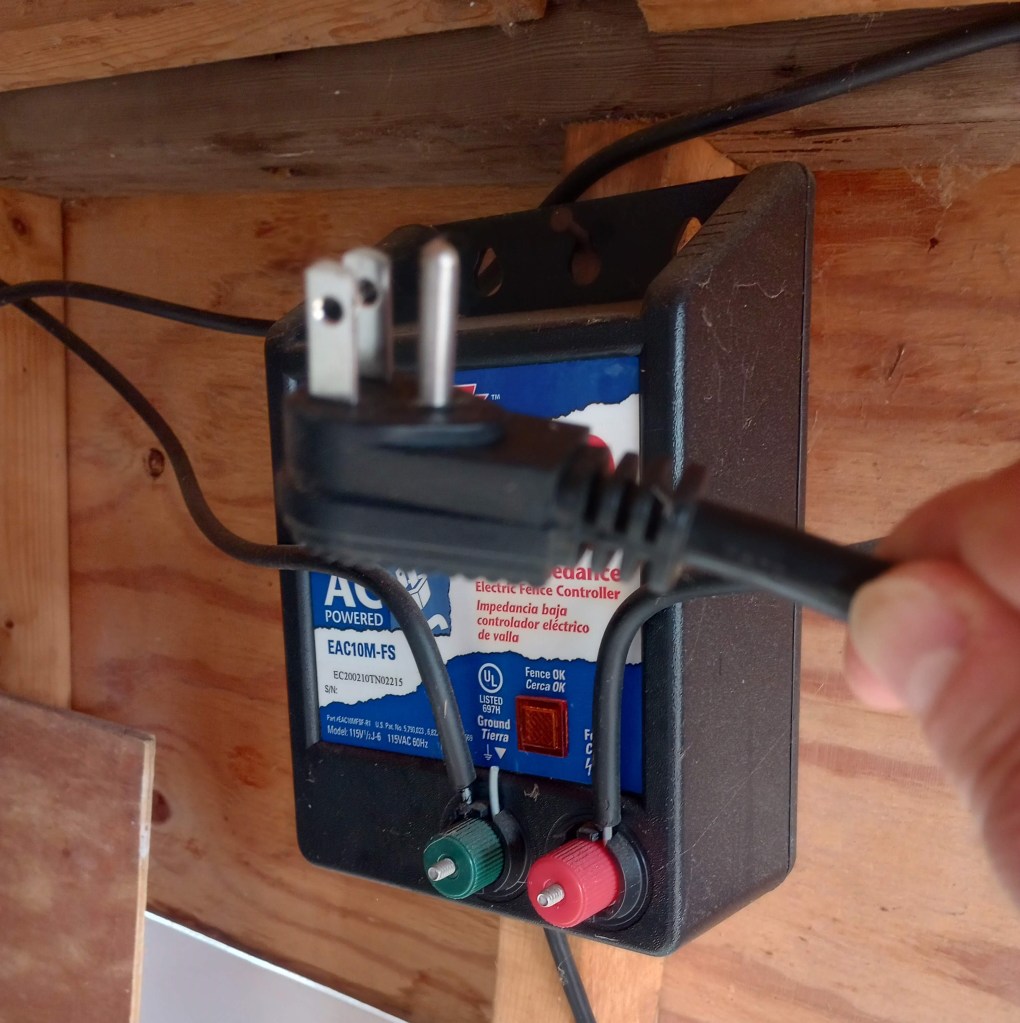
UNPLUG THE THING!
You may burst into flames later, but at least you will not get fried while making the repair.
After watching some internet videos of experienced electric fence fixers, I gathered all my supplies. The fence came with a repair kit, which I was able to locate. I also used a pair of scissors for snipping the lines and a vice-grip plier for crimping my connections. Electric fences have two kinds of line in them. On our fence the horizontal conductive lines, through which the electricity flows, are green. The vertical insulating lines, which prevent the conductive lines from contacting each other and shorting out, are white.
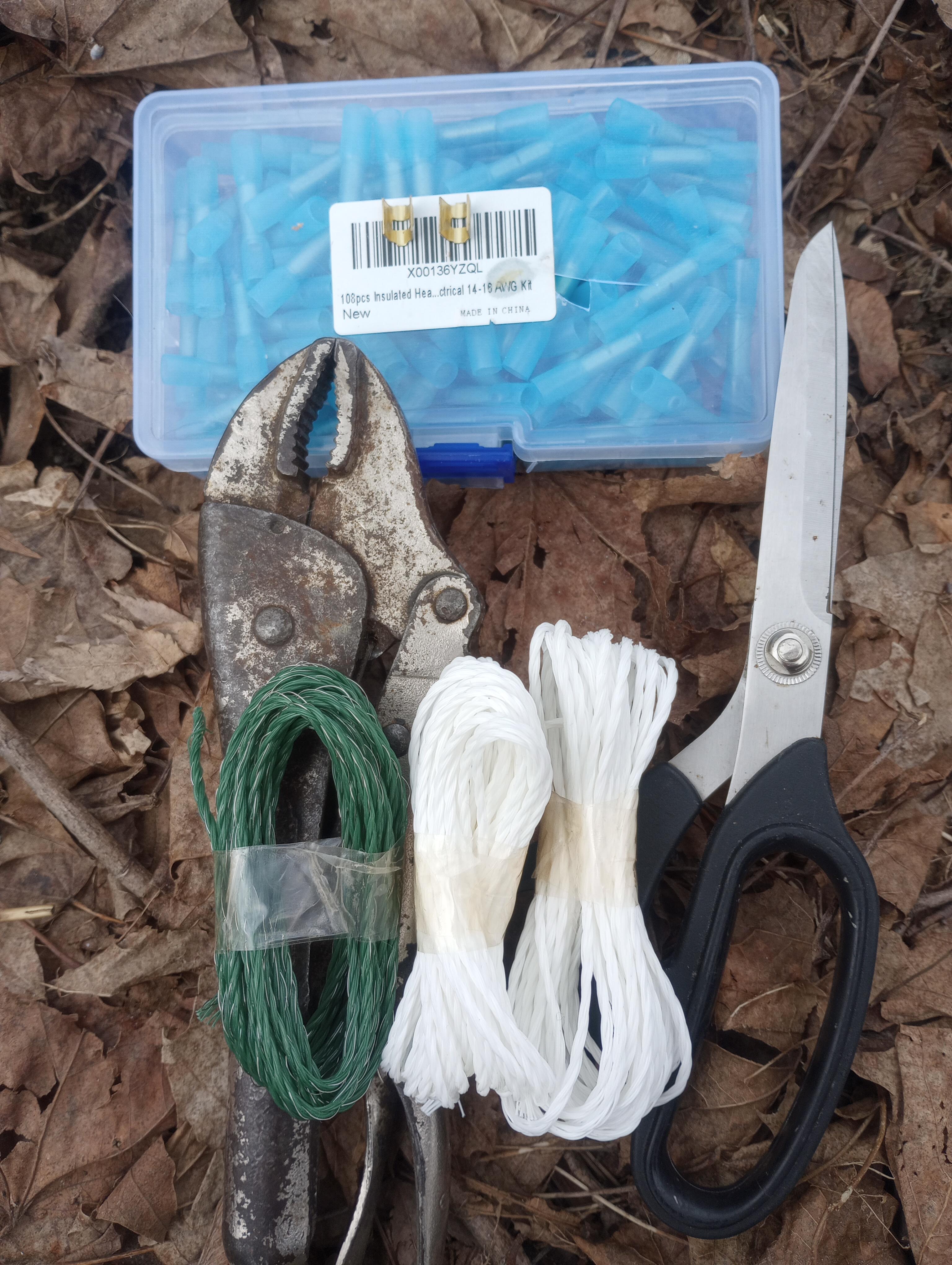
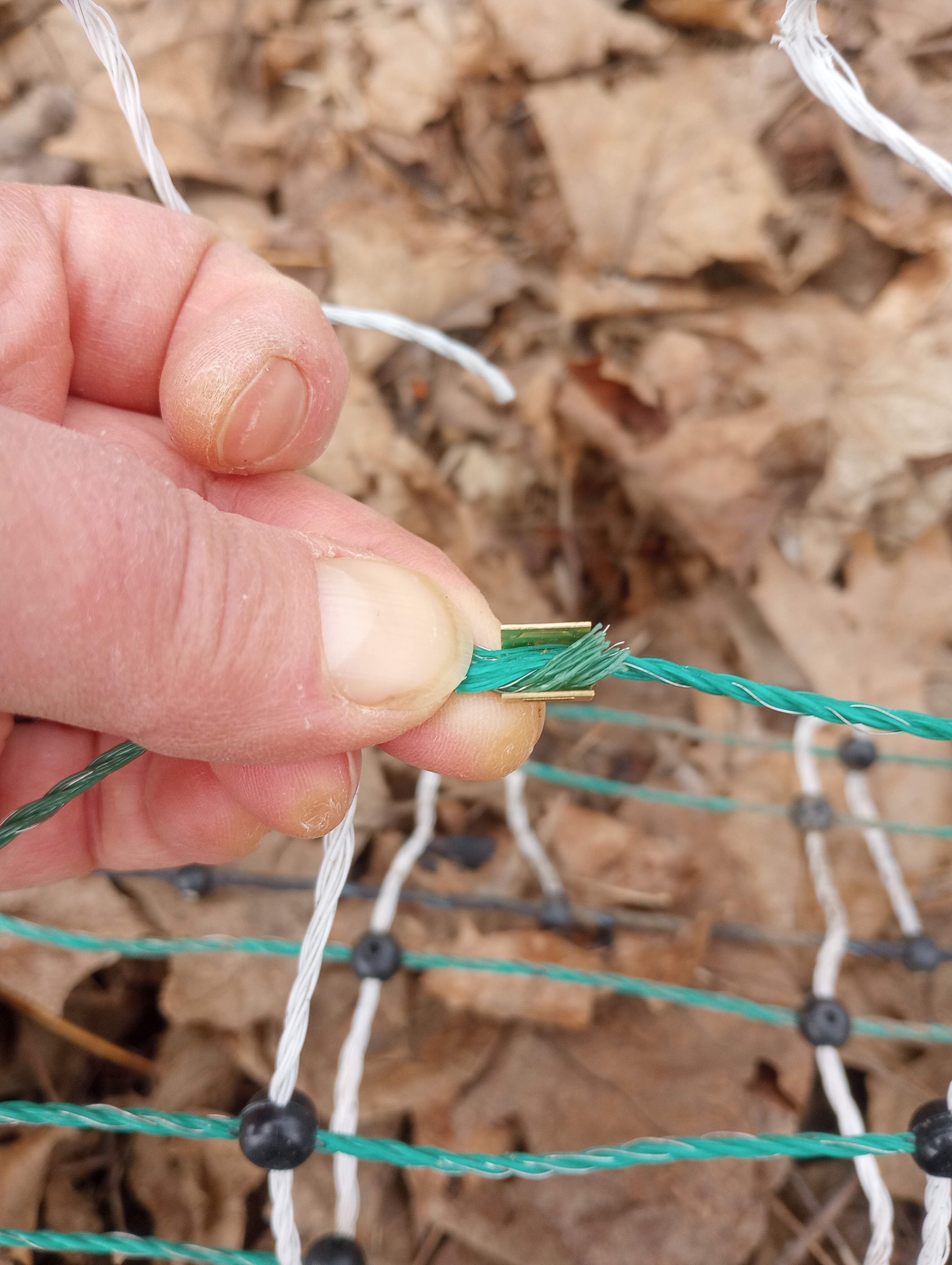
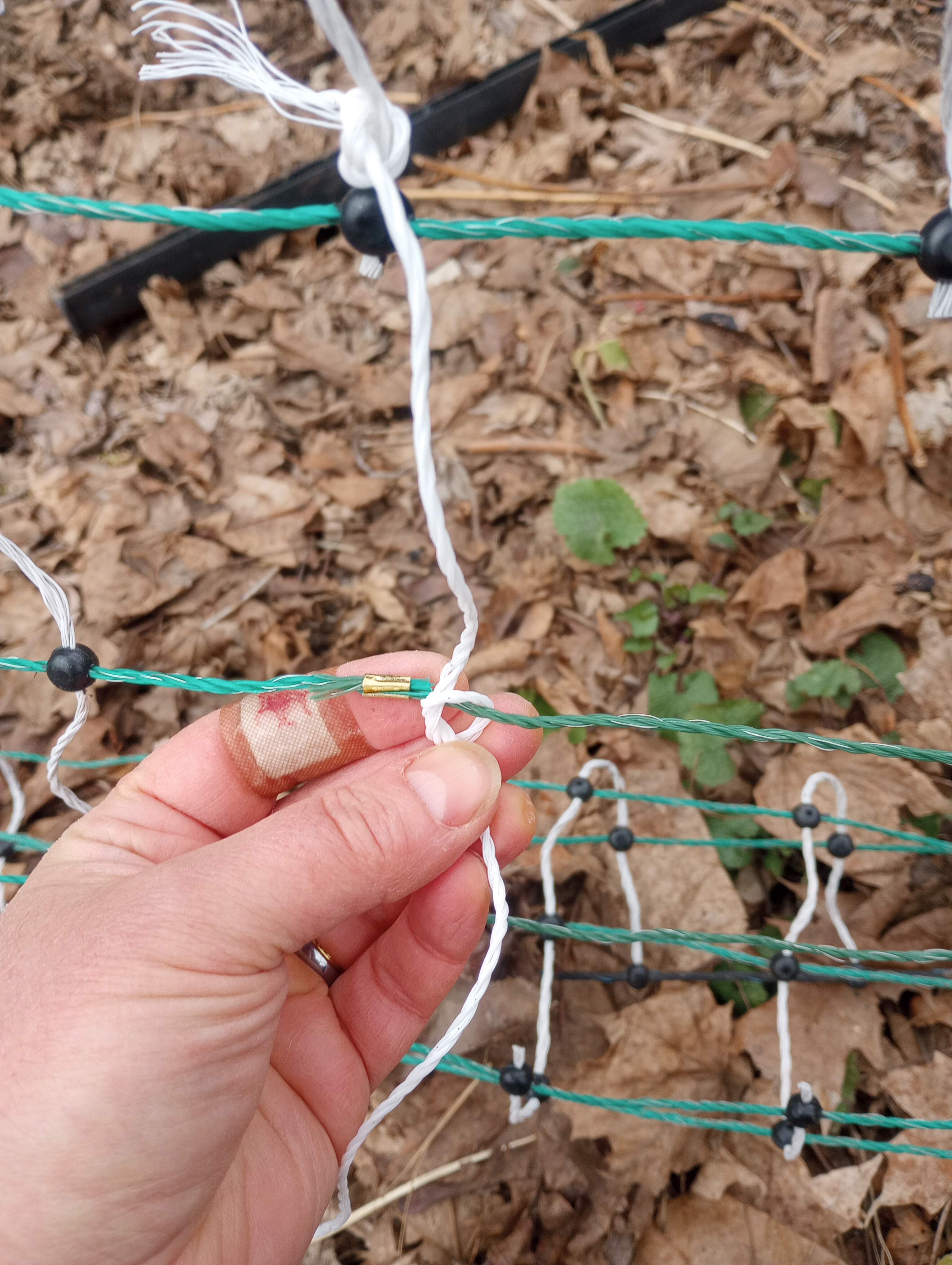
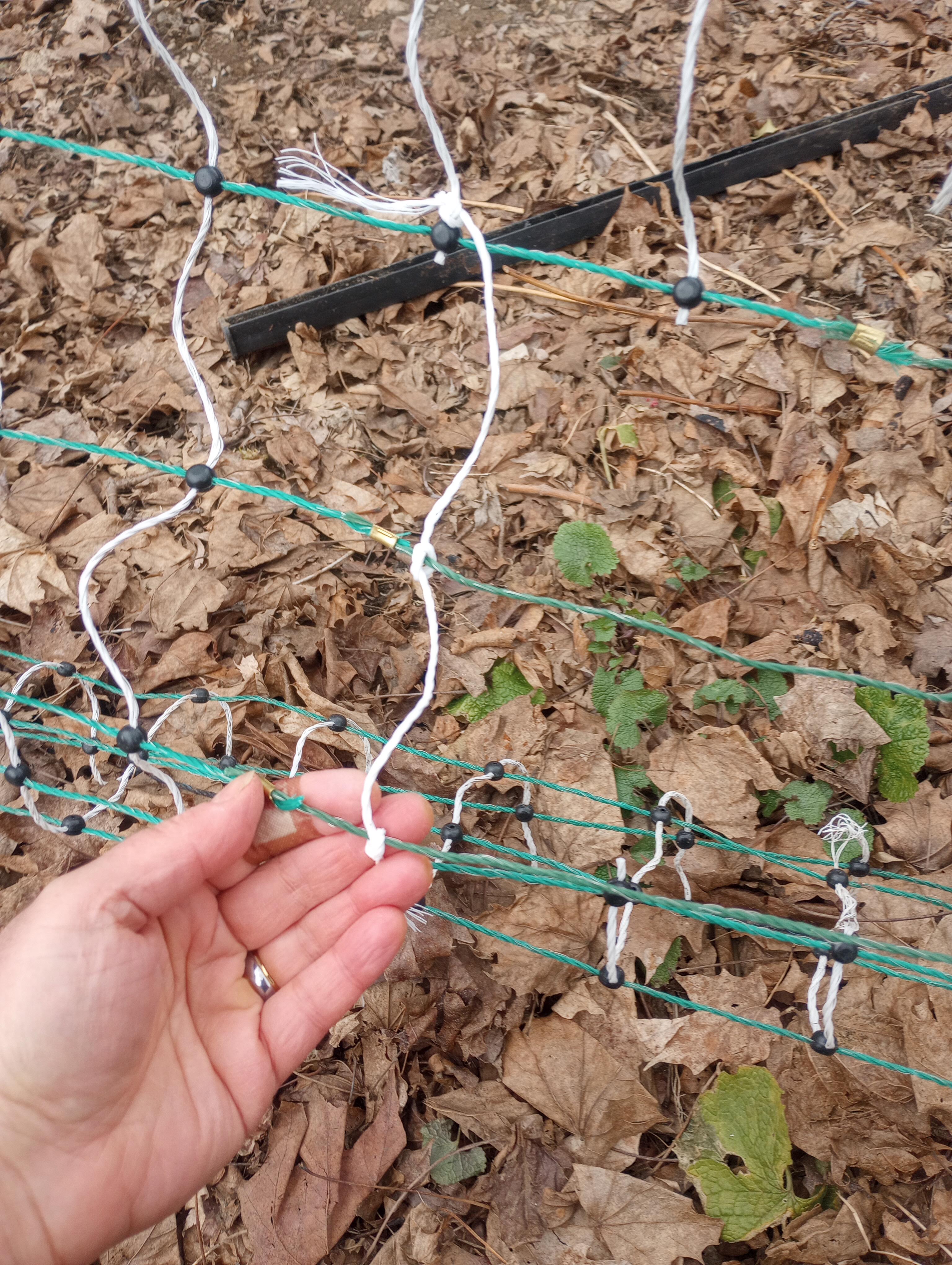
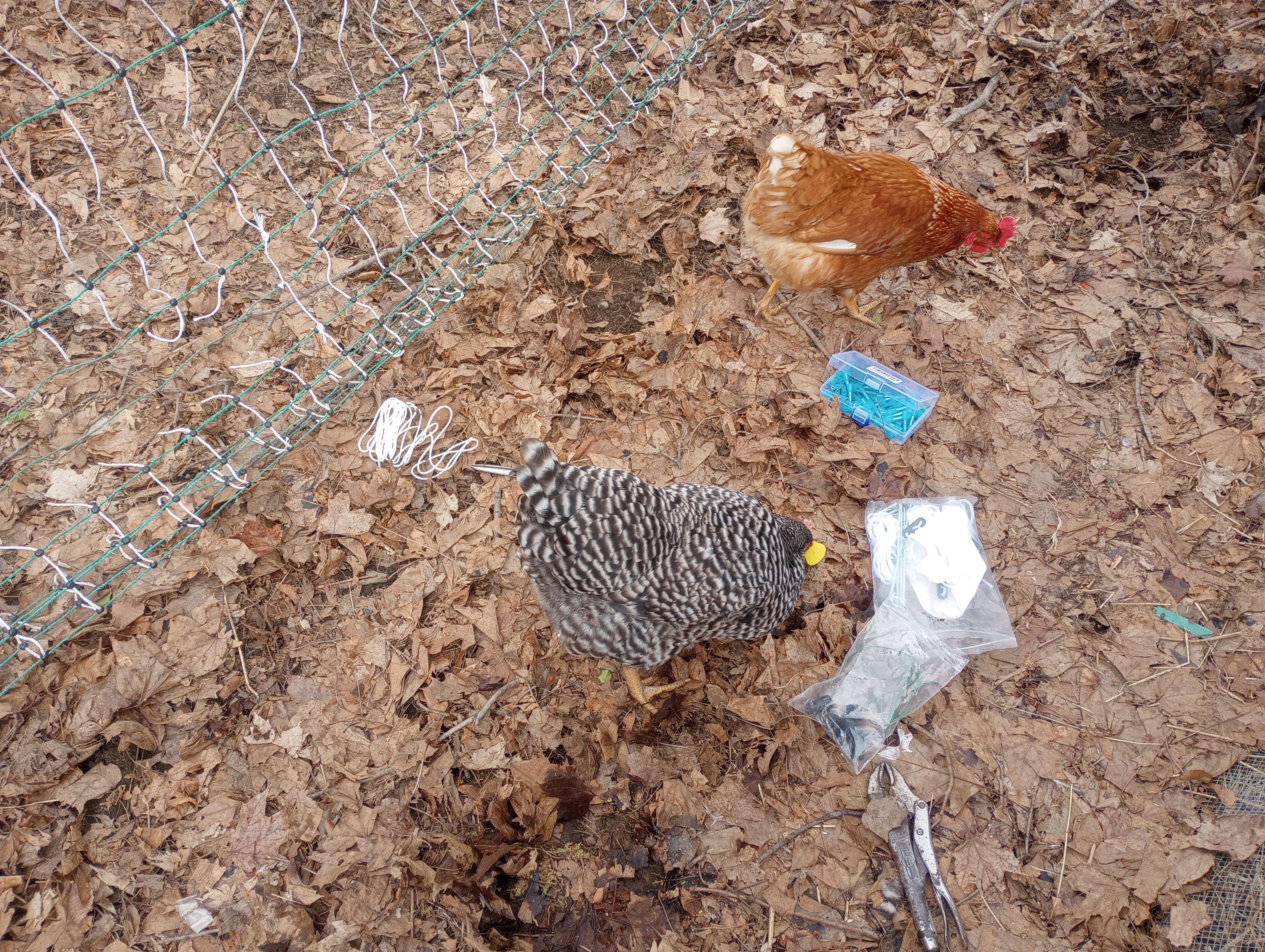
I did just fine using the repair kit, until I ran out of butt splices (giggle). Mr. Food It Yourself had some fancy insulated butt splices (giggle) that were the propper size, but the vice grips kept sliding off the insulation when I tried to crimp them. The kit also lacked enough conductive line to repair both damaged sections. I had to order more butt splices (giggle) and line from the internet. I’ll be 100% ready the next time we need to make repairs.
The next step, which required two hands so I did not get pictures, was to test conductive lines with an electrical multimeter. We happen to have one in the house already. If you get an electric fence for your garden or your animals you should invest in one. I was able to verify that electricity was flowing through the lines I repaired and through the whole fence. We found and repaired all the breaks! Finally, I plugged the energizer back in and turned the fence on. Our garden and chicken run are now protected.
We all have our hang-ups that no amount of exposure can completely extinguish. I will always be a little nervous about electrical wiring. I am confident I can safely handle simple wiring jobs, but I still get the heebie-jeebies when I have to do them. What hang-ups have you had to worth through while living the DIYet life? Share in the comments!
