Getting Springier
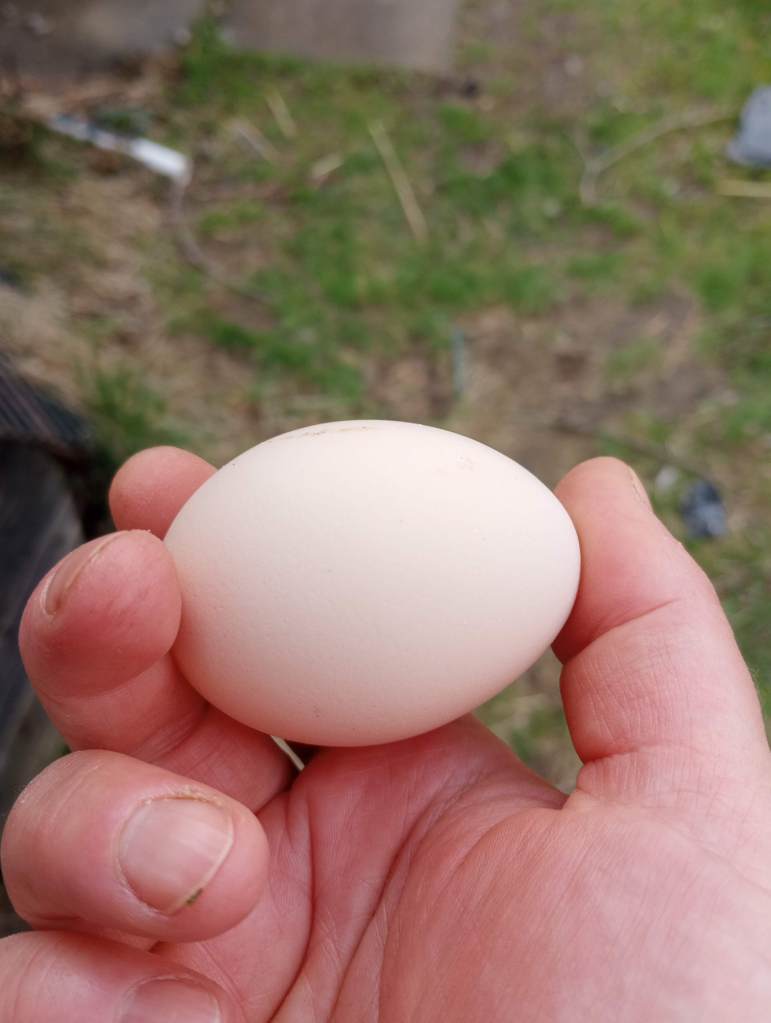
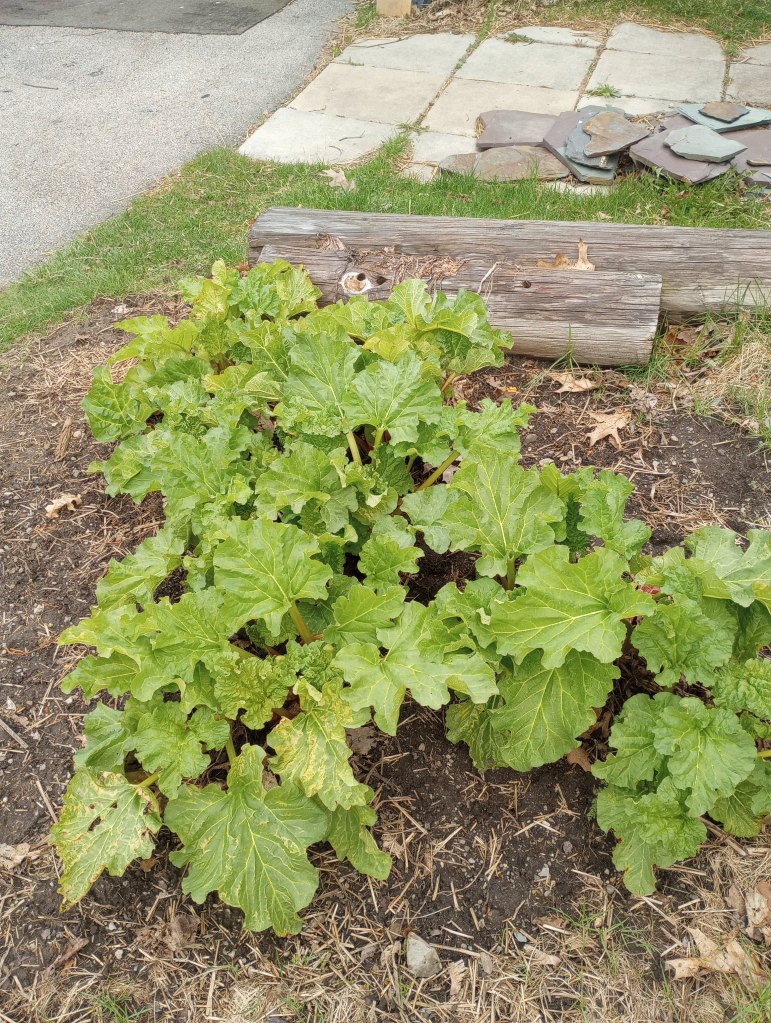
We made it through winter, February thaw, more winter, false spring, encore winter, fools’ spring, and winter’s final stand, and it is now officially spring-ish in central New England! My fruit salad tree and pear tree are blooming, my rhubarb is almost ready to harvest, and the chickens have finally started laying regularly.
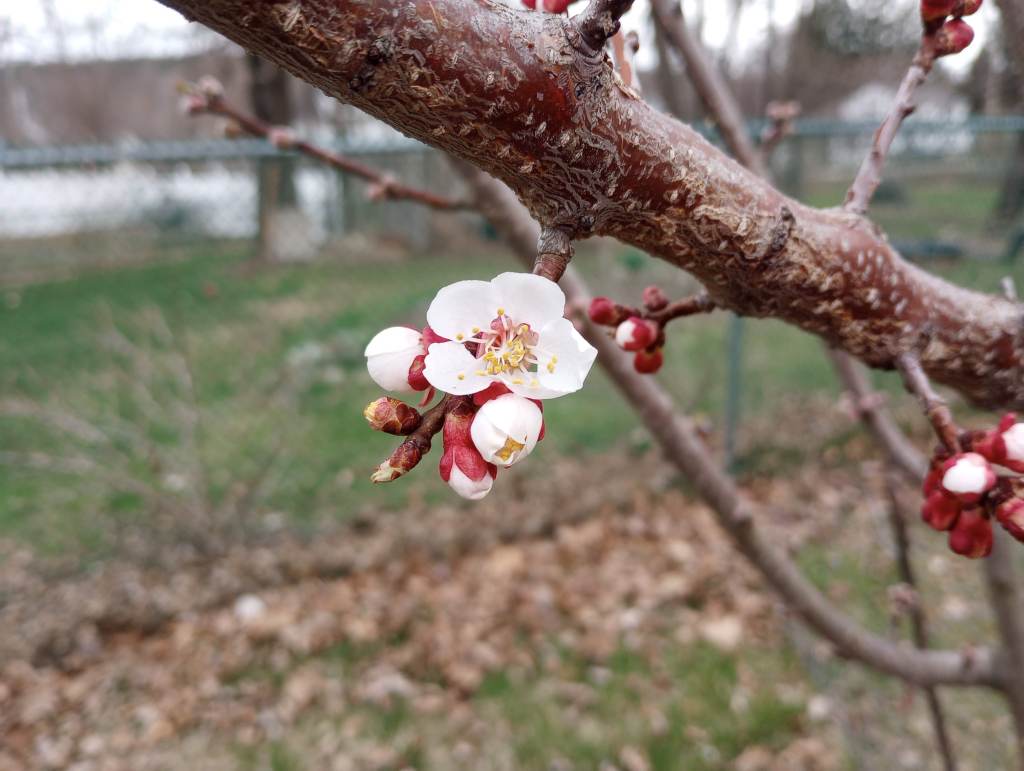
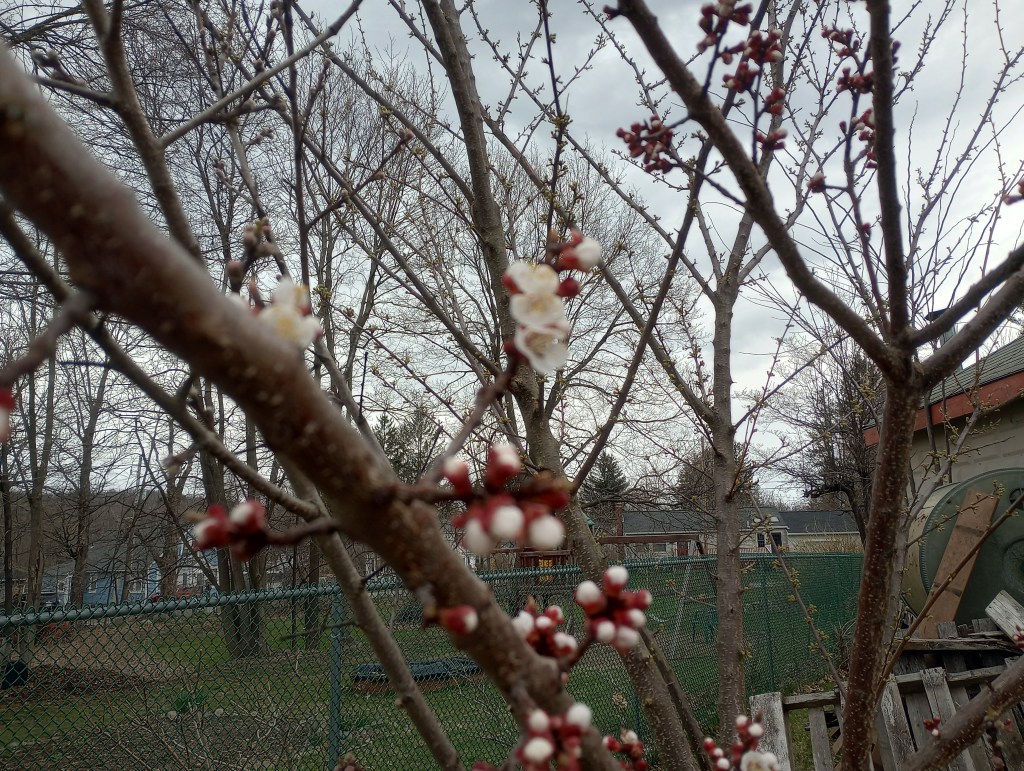
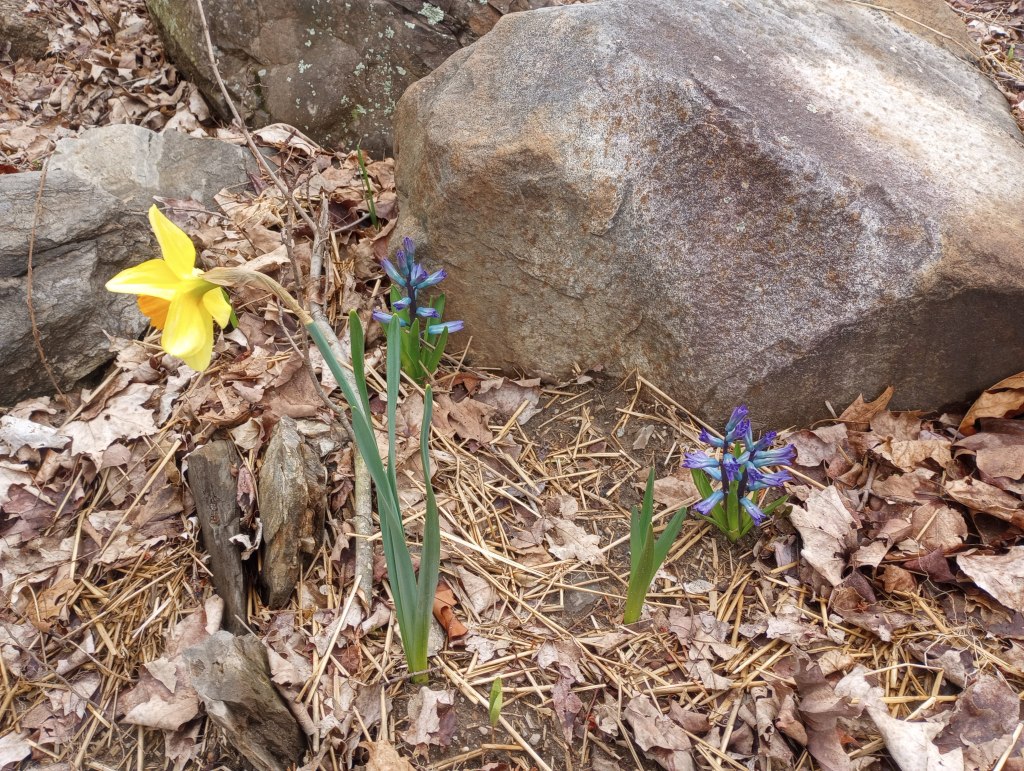
I wish I could get a picture of the fruit salad tree that does it justice. The peach, apricot, nectarine, and plum branches each bloom in a different color. The flowers have different scents, too. Last year we had hardly any flowers and yielded exactly on apricot and one plum. This year we have so many flowers that we may have to strip the developing fruits to protect the branches from breakage. We will have to see how many flowers were pollinated.
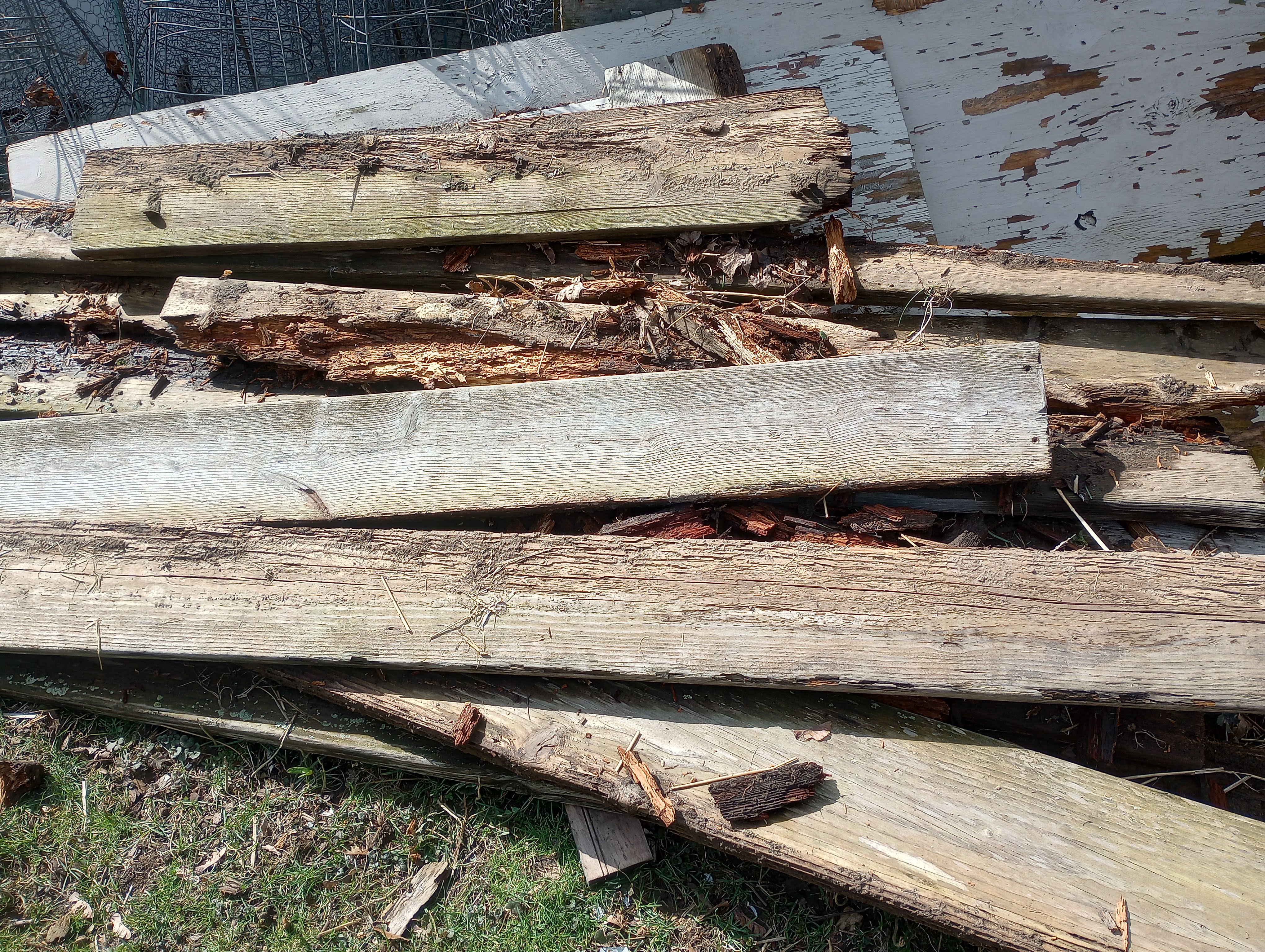
I always feel like I should be planting everything as soon as the ground thaws. That is a very bad idea. The ground is not yet warm enough for most crops and most seeds would just rot. If I considered kale a food I would probably plant it now. The lilacs have not bloomed yet, so it is still a bit too early for peas and beans. As mentioned previously, I needed to rebuild some of my raised beds before planting. Here is what the completed beds look like. You can use the slider to see what the wood from the old beds looked like after I took them apart.

I am happy to report that the fast-food containers I used for starting seeds worked beautifully! In fact, we saw tomato and leek seedlings in just one week. One month later and it was time for phase two of the process- moving the seedling to larger pots.
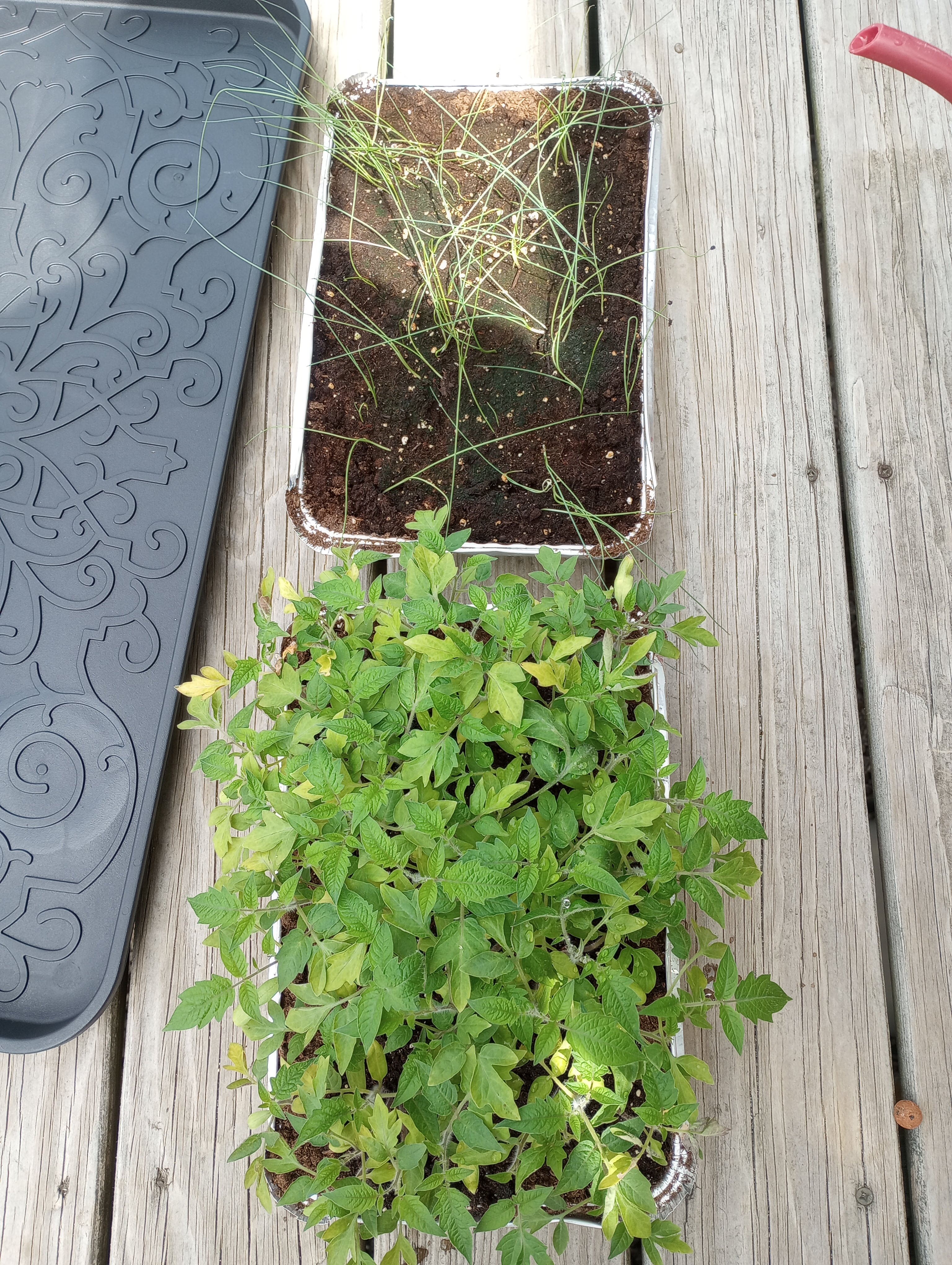
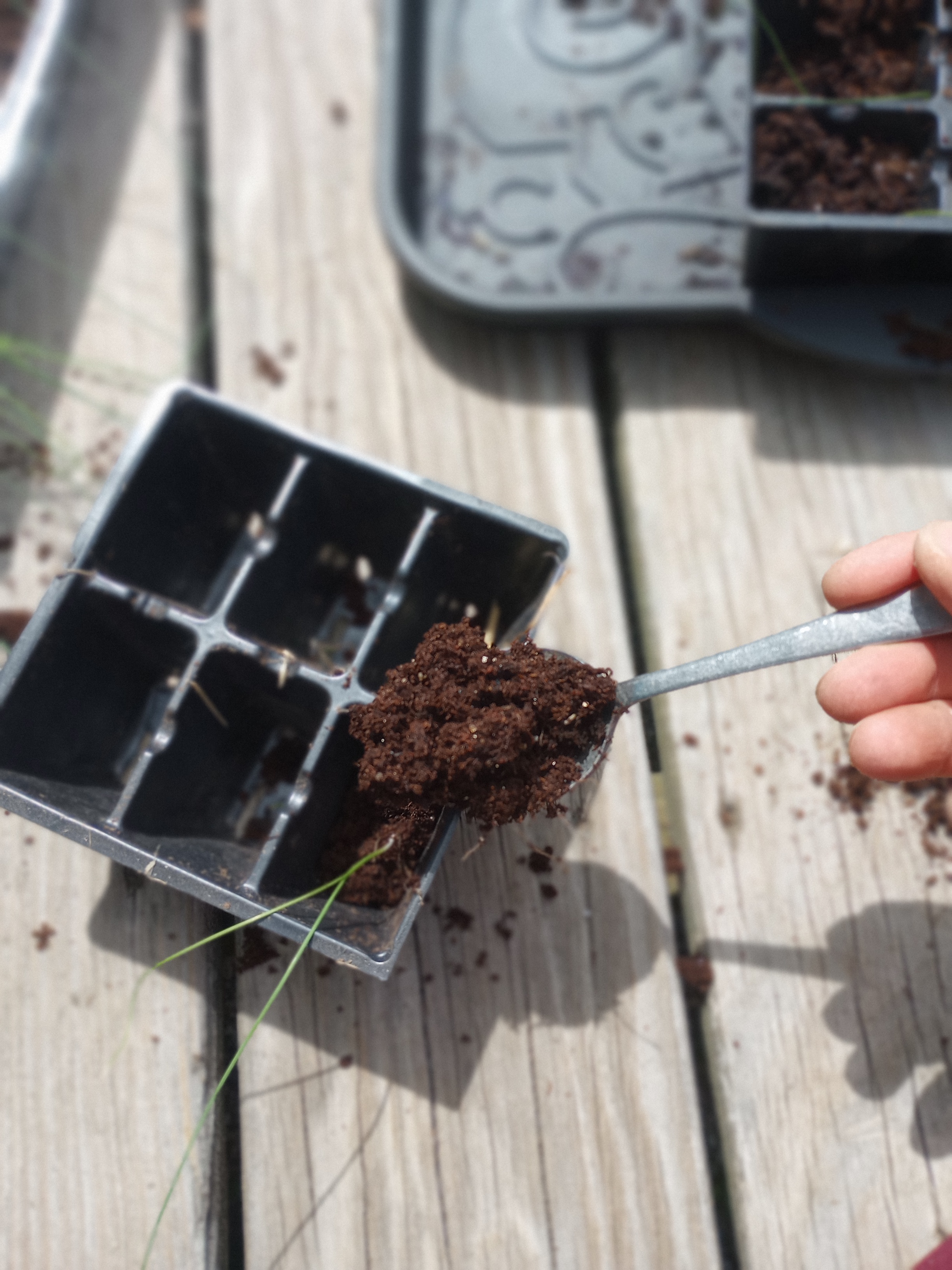

As you can see, the tomato seedling are especially in need of attention. I used a spoon to pick up the seedlings and transfer them to pots and six-packs I have saved from prior garden center purchases. I topped off the soil and watered all the plants. I bought two inexpensive boot trays to keep the water and dirt contained. Boot trays are sturdier than the thin plastic sprouting trays they sell near the seed racks. After repotting, the seedlings headed back inside. I will start hardening them off in a few weeks. I certainly have more than I need for the Food It Yourself garden. However, I am not 100% sure that all those seedlings will survive for a month until planting time.
An extra note about transplanting depth: I read up on it, and both tomato and leek seedlings can benefit from being “tucked in up to their chins”. It encourages deep roots for the tomatoes and longer white bulbs (the part you eat) for the leeks.
I am also still considering exactly what I will plant this year and where I will plant it. After two years of avoiding all squash, melons, and cucumbers, I believe we can safely plant these without a repeated cucumber beetle plague. Just in case, I have purchased traps and lures for these pests. Here is the layout I am considering for the raised beds.
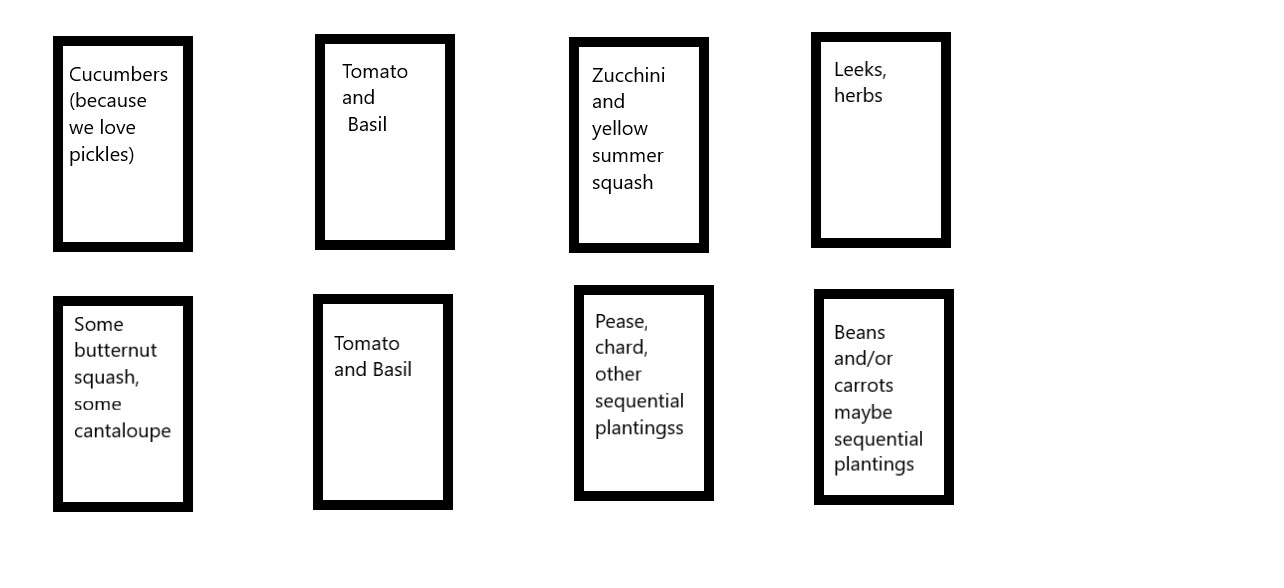
As always, the graphic above is just a guide. Who knows where the plants will actually go when the time is right? It is all part of the adventure that is living a DIYet.
We have so much going on at Food It Yourself headquarters lately. I am going at top speed all the time. That is just how spring is in New England, though. Next week could feel like summer, or it could be winter 3.0. We do the best we can with what happens.
How are you planning your 2024 garden? If you are in a place where autumn is setting in, how did your season pan out? Share in the comments!
