Another Episode of “Kitchen Heneral Hospital”
I have said it before and I’ll say it again- keeping animals is a 24x7x365 commitment. Life here at Food It Yourself HQ has been hectic lately due to the requirements of being a responsible adult human. Then, to top it off, Hennifer Aniston got bumblefoot. The University of California’s Agricultural Department has an excellent PDF pamphlet on what exactly bumblefoot is. The TL,DR: at some point Hennifer got a small cut on her foot which became infected. The cold, wet weather in central New England surely did not help. We take extraordinary measures to keep our coop clean, but no cleaning regimen is perfect.
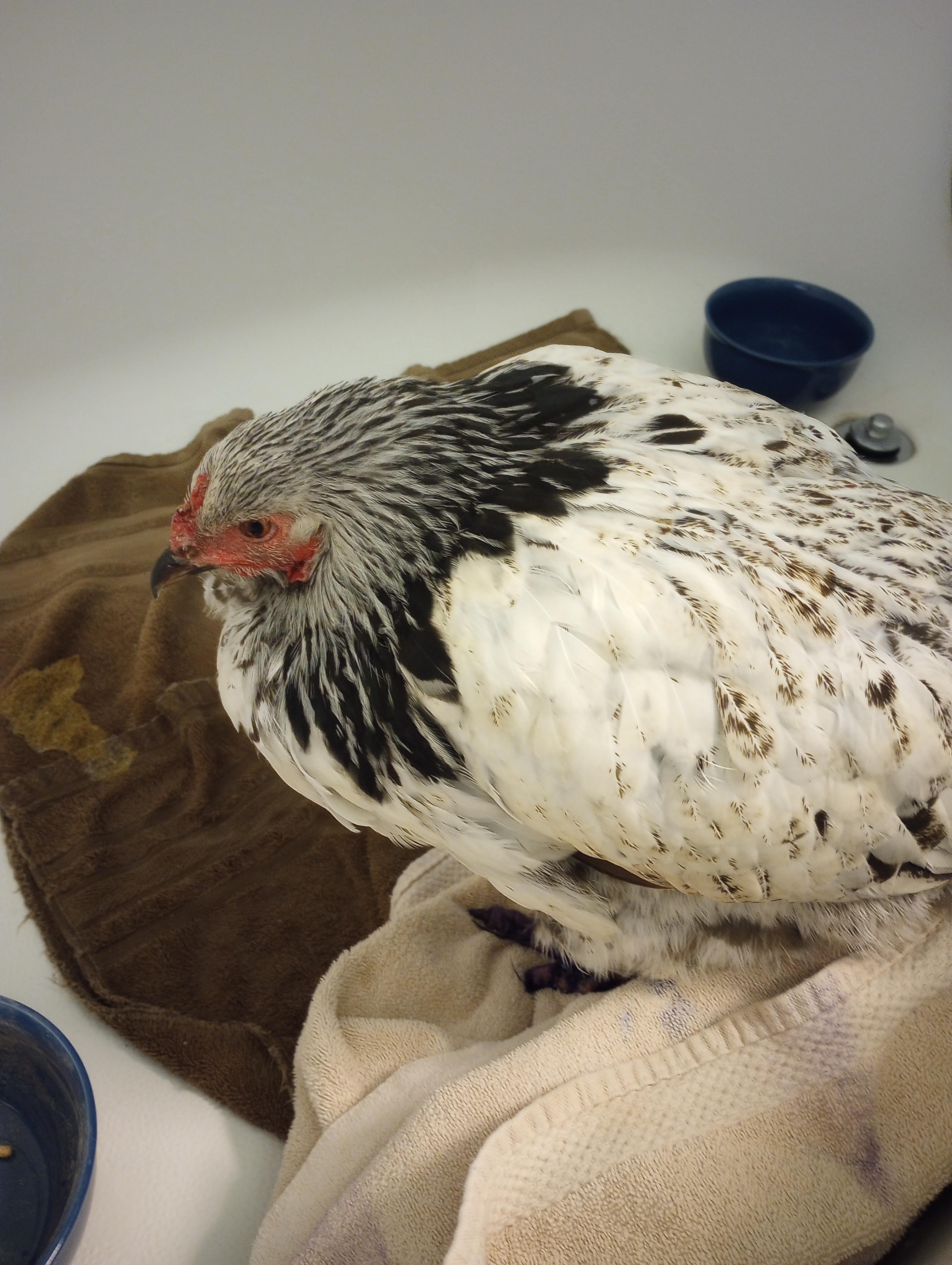
I noticed on Saturday that something was off. This is very concerning, because chickens rarely let you know if they are sick or injured. (It is an evolutionary defense of many animals that easily become prey. Sick looking members of the flock look like easy pickings to a predator.) When I opened the door to the run, the six other hens ran into the yard. Hennifer stayed put, perched on one of the fallen logs that lay in the run. Then I saw it- her feet were swollen and red. I alerted Mr. Food It Yourself and brought her inside. She barely flapped a wing when I picked her up, which was also concerning.
We started with a warm foot soak in the bathtub. This cleaned off Hennifer’s feet and allowed us to get a good look. Believe it or not, this chicken is already missing two toes. I was shocked. The stumps are healed, so these are old injuries. That is how strong the instinct is for chickens to not show weakness. Also, that is how strong the healing power of a chicken can be!
We flushed her feet with sterile saline. You can buy spray cans of sterile saline in the first aid section of most drug stores and department stores. After her feet dried, we sprayed them with Vetericyn, a topical antibiotic for animals. We usually buy it at our local feed store, but pet supply stores often carry it, too. We followed with a spray of Blu-Kote, another veterinary preparation commonly available at feed stores and agricultural supply stores. It is antibacterial, antifungal, and creates a protective barrier on the skin.
A side note on Blu-Kote: This product has some critics, for good reason. The blue color it imparts to an animal’s skin can mask the redness that signals an infection. We knew Hennifer had an infection, and planned to keep her inside under close watch, so we used it. If your chicken (or other pet) has a fresh wound, I recommend cleaning and using an antimicrobial agent that does not dye the skin.
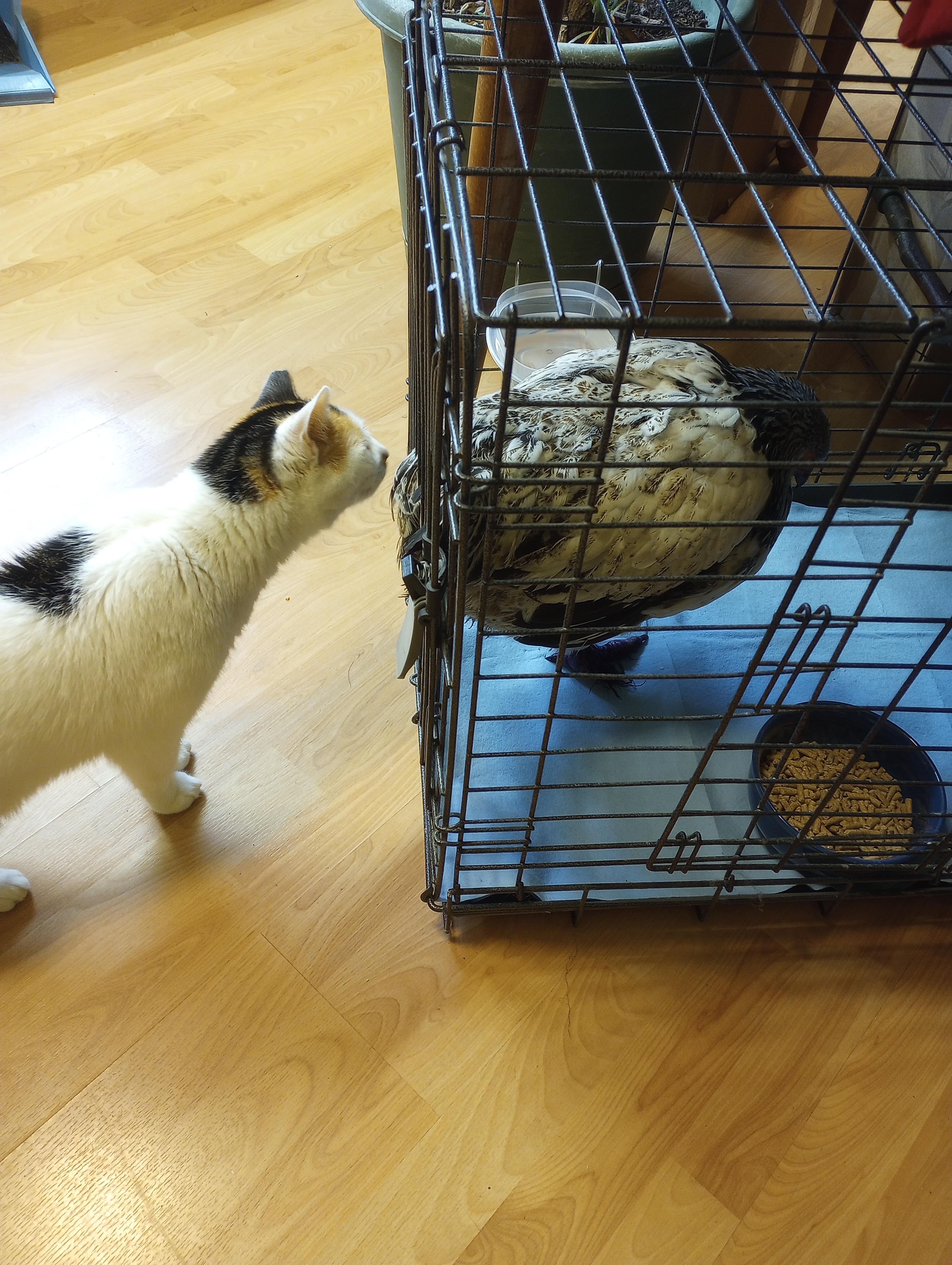
We initially pondered whether to put Hennifer back in the coop or to get her set up in the pet crate we use as a chicken hospital. The deciding factor was her weight. She was so much lighter than all of our other hens, including her nest-mate Michelle Obrahma. (I checked all the other chickens’ feet for signs of infection, which necessitated picking them up.) Extra treats and an extra clean cage are just what this chick needs!
A few notes on keeping a chicken inside temporarily, based on our experience since 2017 (please drop more wisdom in the comments, if you have it!):
- You will need to clean and disinfect every surface accessible to the chicken. I cleaned the tub with disinfectant cleaner after we soaked Hennifer’s feet. I have been disinfecting the floor after every time she walks around the kitchen.
- An incontinence pad (a.k.a a “chuck” in healthcare circles) makes the best liner for a sick chicken’s enclosure. Change as needed to keep things clean.
- You will have to clean and sanitize your floor at least daily while your chicken is recooperating. (Hells yes, pun intended.)
- Chickens are social. Talk to your chicken while they are admitted.
- Give the chicken snacks. All chickens should get many snacks.
Today is Thursday, and Hennifer is already looking much better. She is holding her tail up, which is a sign of contentment and general well-being in chickens. She always has a full crop, and we top off her food and water as needed.
We still need to keep her inside for now. Mr. Food It Yourself will determine, with his chicken tender skills, when she can return to the coop. Keeping chickens has been an excellent experience for me, even though they can take up large quantities of time and energy. What animals are involved in your DIYet? How have they helped you appreciate raising animals on a commercial scale? Share in the comments!
