We’re Chillin’
The weather in New England has been New Englanding so hard lately. It was almost 60° Fahrenheit earlier this week. Yesterday, we got a festive snowfall. Tomorrow, the expected high temperature is 18°F. The overnight low will be in the single digits. We humans can adjust, to a degree, to such vast fluctuations in temperature with clothing and outerwear choices. Chickens and other birds have more difficulty. How will I get my flock ready for the extreme temperature drop?
Planning ahead is key. We added wind proofing to part of the run last month, well before deep dives in temperature typically occur. Keeping out of the wind is hugely helpful for keeping a flock safe in the cold. We added a thick layer of straw to the run. This gives insulation from the cold ground and keeps their feet dry. Dampness is a serious foe in the battle to survive winter. We also check food and water levels multiple times per day. Staying warm burns calories, so our ladies need to eat. Chickens can not eat if they do not have water available.
For a big calorie boost, chickens can benefit from a suet block. This is just a chunk of fat mixed with seeds and grains. They are commercially available, but almost always contain peanuts or have potential peanut contamination. Since I am deathly allergic to peanuts, I looked for a way to make my own peanut-free suet block. It is actually not too difficult. Here is how it went down.
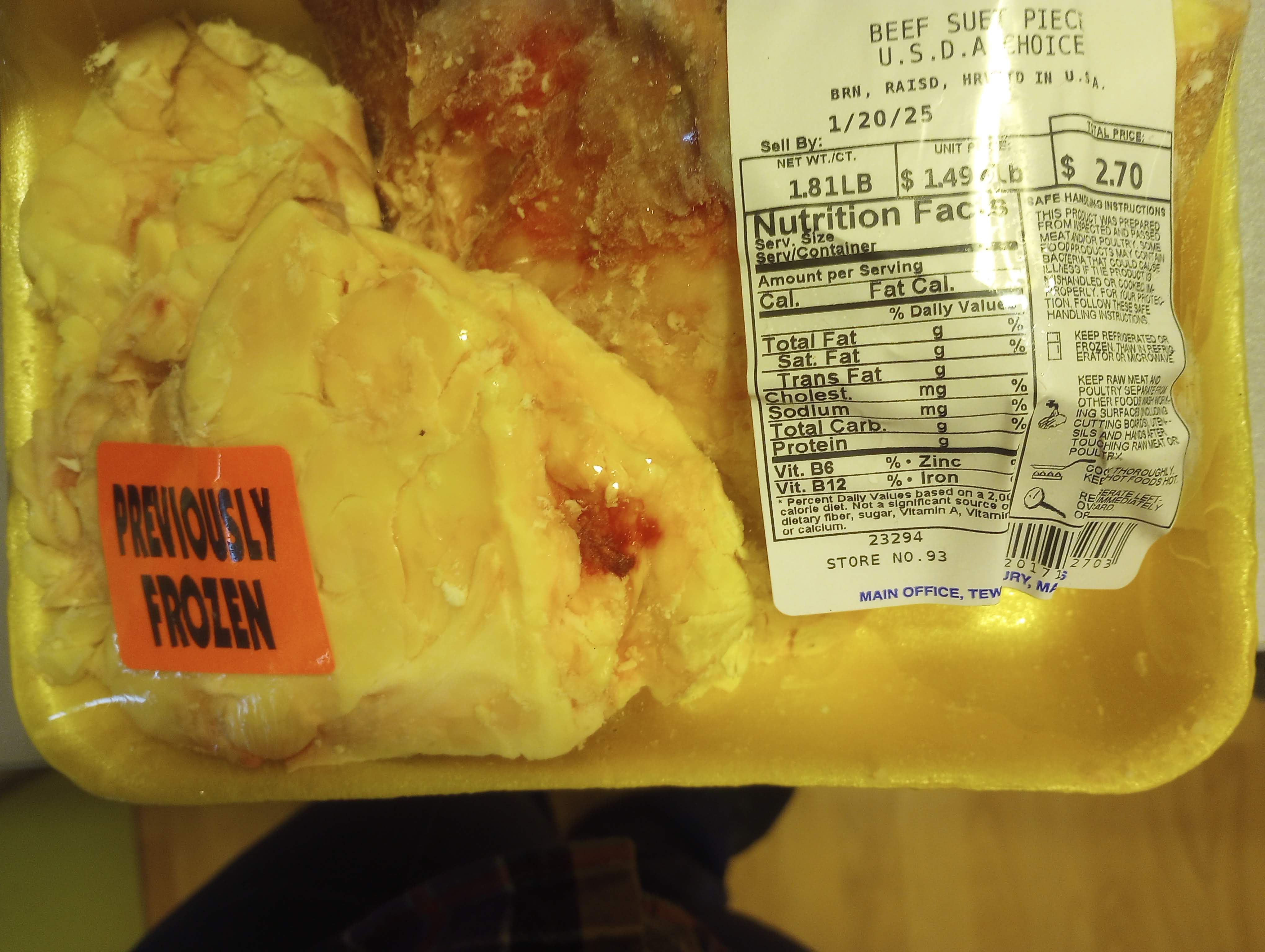
My favorite local grocery store sells beef suet in the meat section, so I picked up a package of it. The suet needs to be rendered to remove the proteins- bits of meat an connective tissue- as these spoil quickly. Do not feed your flock spoiled food. Just don’t. I scoured the interwebs for the best way to melt the fat and separate it from the other bits. Food.com, which has some really amazing people food recipes, also had these bird food recipes. Those recipes also offer an unexpected method of suet rendering: use the microwave.


I chopped my suet, placed it in a Pyrex bowl and covered with plastic wrap. While the microwave worked it’s 20th century magic, I mixed scratch grain, raw sunflower seeds, and meal worms (all high calorie chicken treats) in an upcycled foil pan I had kicking around.
After 2, 6-minute cycles in the microwave (with 5-6 minutes after each cycle) the fat was liquid. I strained the fat into the foil pan using a fine mesh sieve.


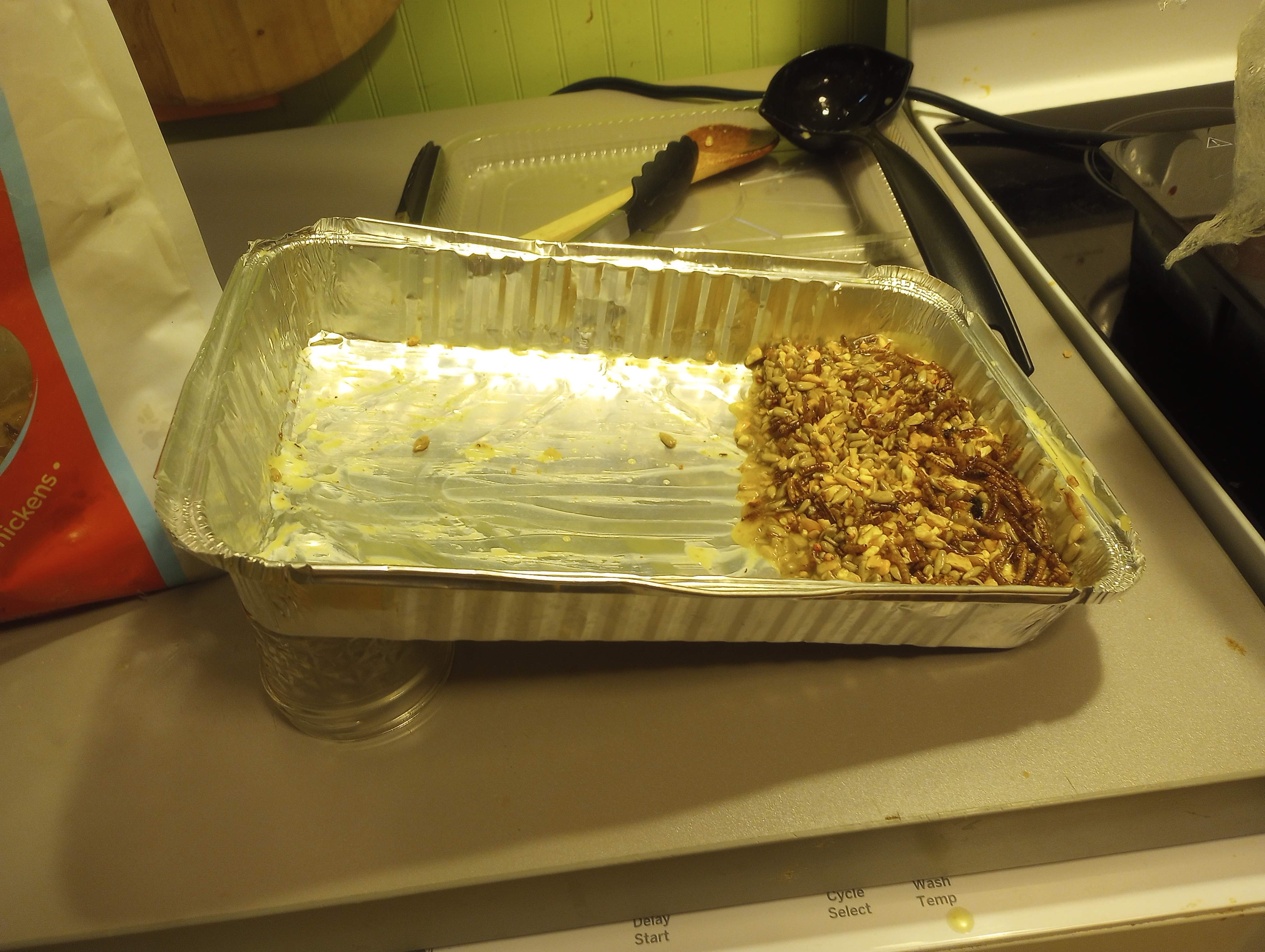
I squished the treat/fat mixture into one end of the pan. A small canning jar held it at the perfect tilt. Since it was already below freezing, I covered the pan with foil and left it in our entry way to firm up. Why use freezer space when it is freezing outside?
The next morning, I put the suet/seed/worm block into my trusty suet bock feeder. These are very inexpensive at hardware stores, and can hold many different treats for your chickens. I like to put carrot greens in them in the summer.
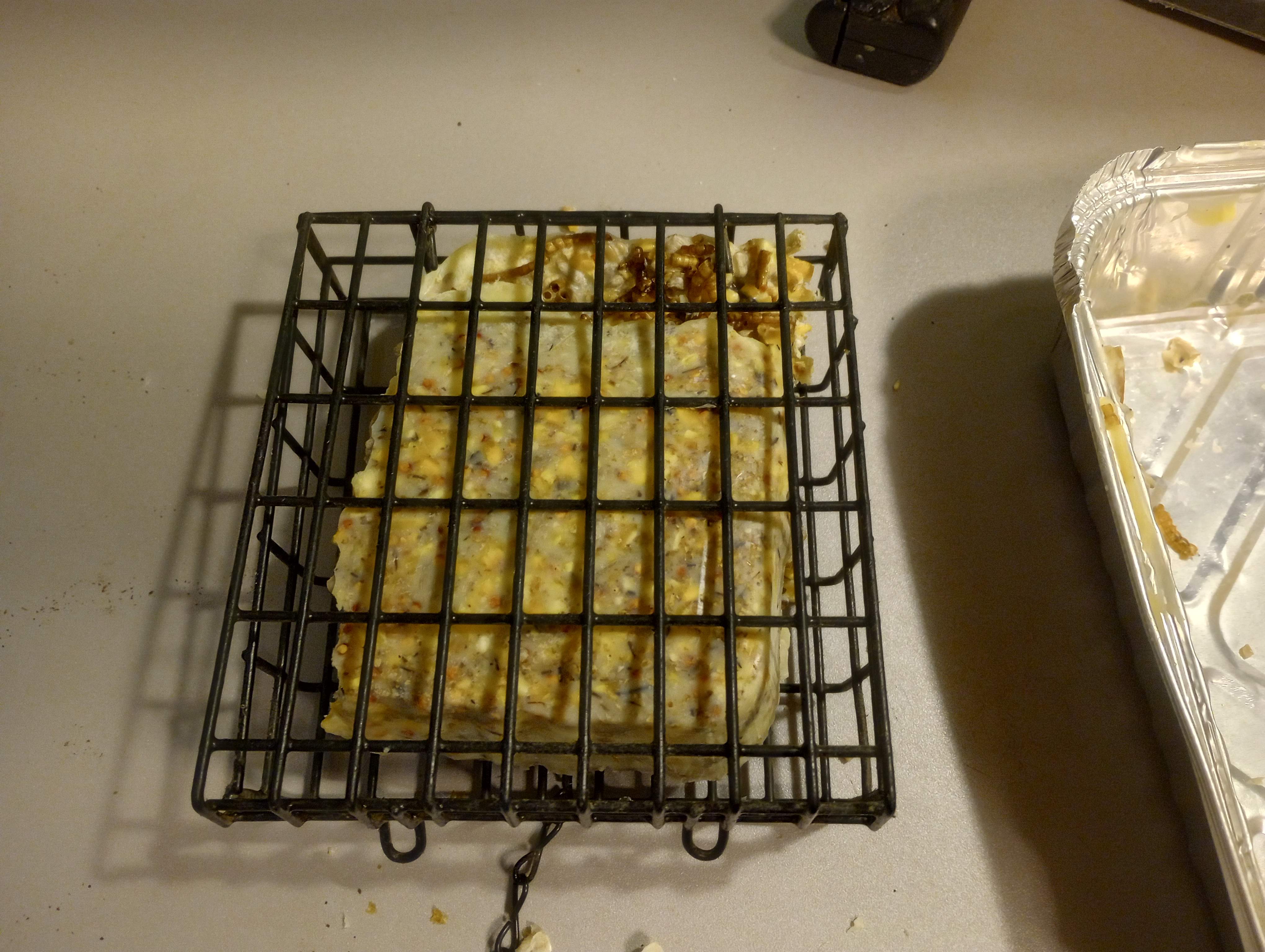
I hung the block in the doorway to the wind-proofed part of the run. Here was the girls’ first impression.
While I am on the subject, here are some things NOT to do to your flock in the extreme cold.
- Do not put your birds in sweaters. Every fluffing year people who know I knit send me photos of chickens in sweaters. Chickens, like all birds, keep warm by poofing out their feathers. A sweater prevents maximum poof. Do. Not. Put. Sweaters. On. Your. Chickens.
- Do not use a slow cooker or aquarium heater to keep their water from freezing. The water will be at prime bacteria-breeding temperature. If your flock does not get sick from bacteria, the slow cooker is likely to start a fire. If there is a fire, your insurance company will quickly see that you used an appliance rated for indoor use outside. They will deny your claim and you will not receive pay out for the damages your very poor decision caused. Buy a purpose-made appliance for preventing frozen livestock water.
- Do not use a heater in the coop. If it falls over, the birds may be unable to avoid contact with it. They can easily end up with unsurvivable burns.
I have said it before, and I will say it again. Caring for animals of any kind is a 24/7/365 commitment. I am committed to keeping my flock of egg layers safe and happy, no matter the weather. What are you doing for your animals in the cold (in the northern hemisphere) or the heat (in the southern hemisphere)? share in the comments.
