Christmas in July-I Was Bread for This
Yeah, it’s been a while since I made a new post. But I have posted this post, which is more important. Since my las post was a Christmas post, this is a Christmas in July post. Specifically, it is a post I am making in July about something from Christmas.
Last Christmas, my dad found an amazing bread recipe. It is called “panis quadratus“. He got the recipe through some links from one of the archeology magazines and/or websites he reads (he is pretty “old school”, you might say). The recipe was found amid the rubble of the city of Pompeii, famously destroyed destroyed in the year 79 CE by the erupting of Mount Vesuvius. As a descendant of the Roman Empire, Dad was very excited to try this recipe, and I was also. Here is how that went.
The ingredients (in modernized measurements) are:
- 6 ½ cups whole wheat flour
- ¼ cup bread starter*
- 2 1/8 cup tepid water
- 1 tsp salt
- 2 teaspoons poppy seeds
- 2 teaspoons fennel seeds
- 1/2 cup finely diced parsley
- *the bread starter is equal parts flour and water with 1 teaspoon of yeast. We used half a cup each of flour and water.
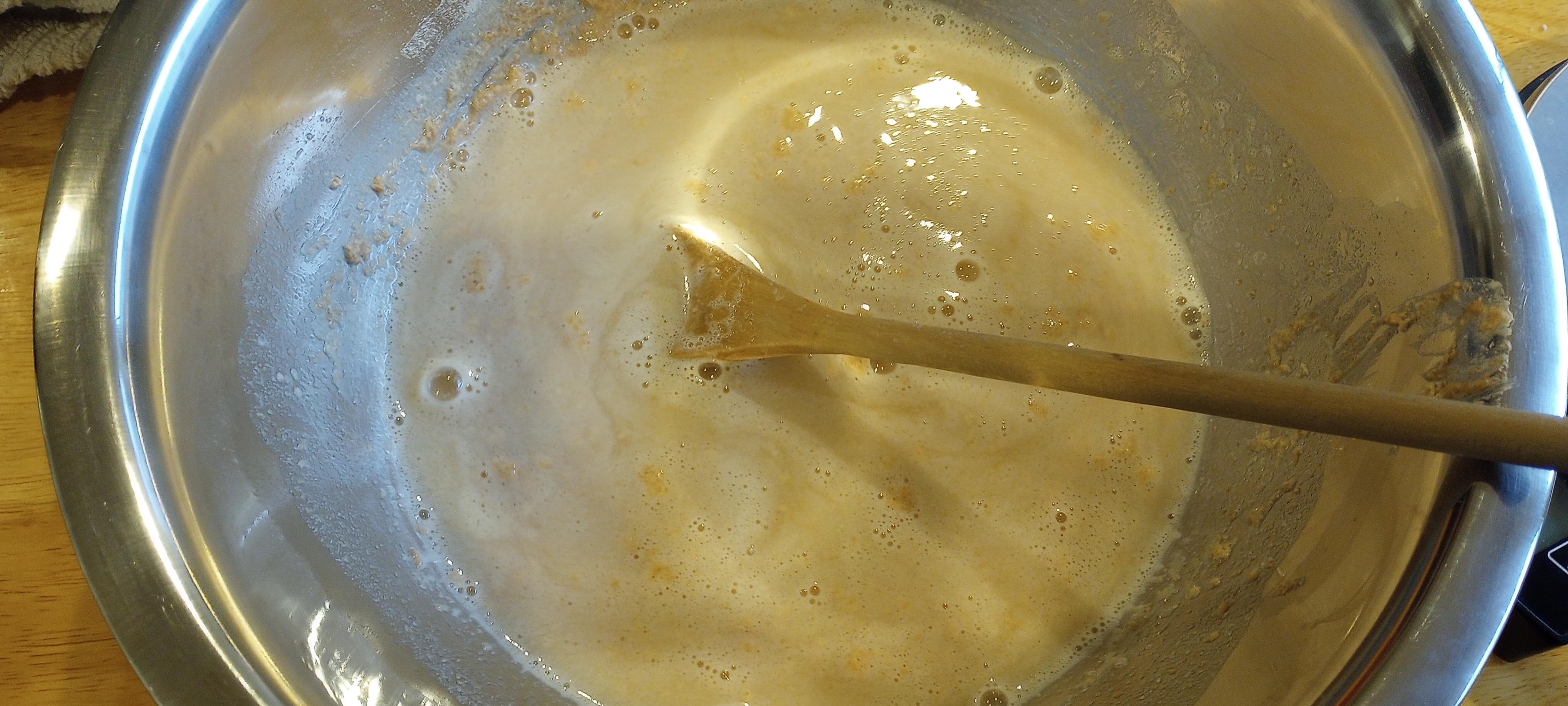
We mixed the flour and water and yeast for the starter and let it get all bubbly. Modern recipes frequently call this “making a sponge”. It lets the dry yeast wake up and start burping out copious bubbles of carbon dioxide.
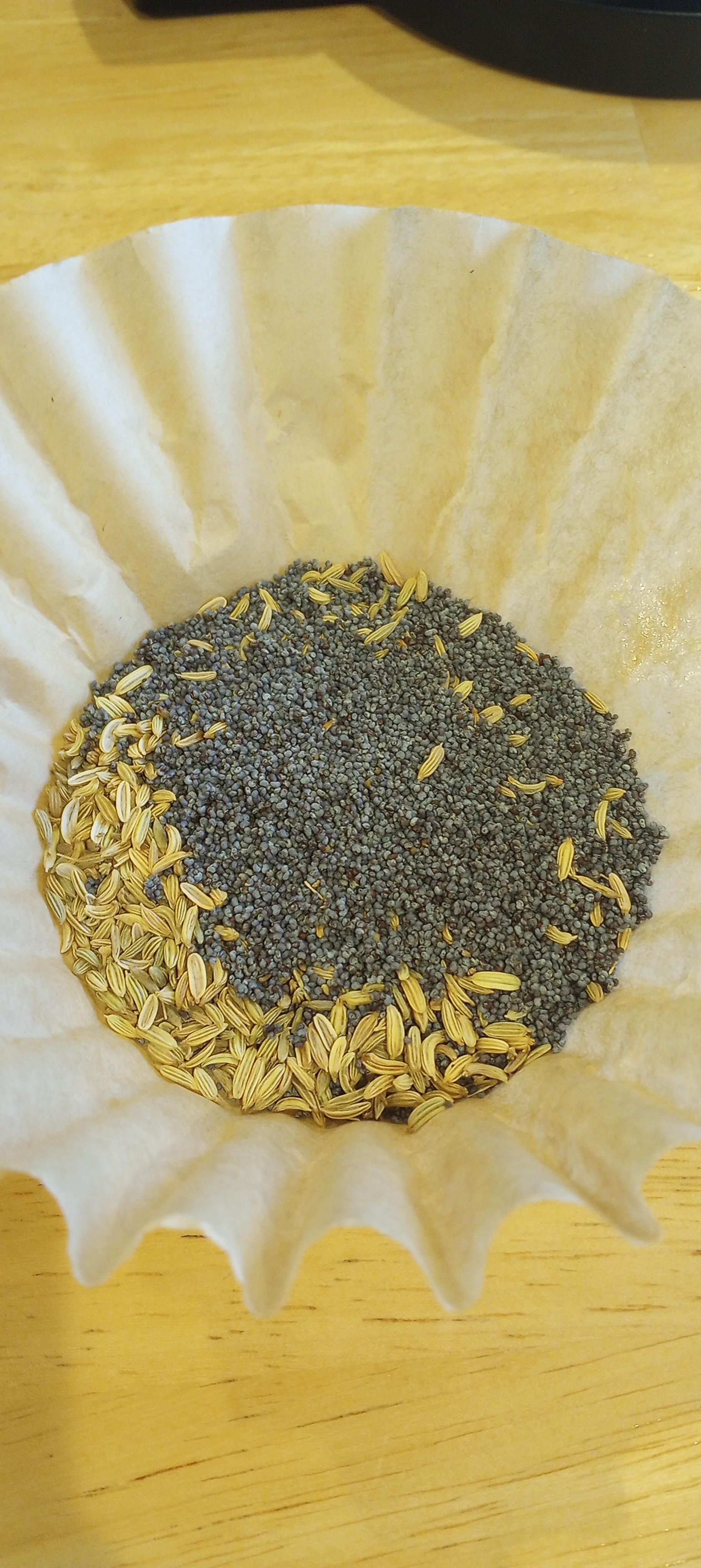


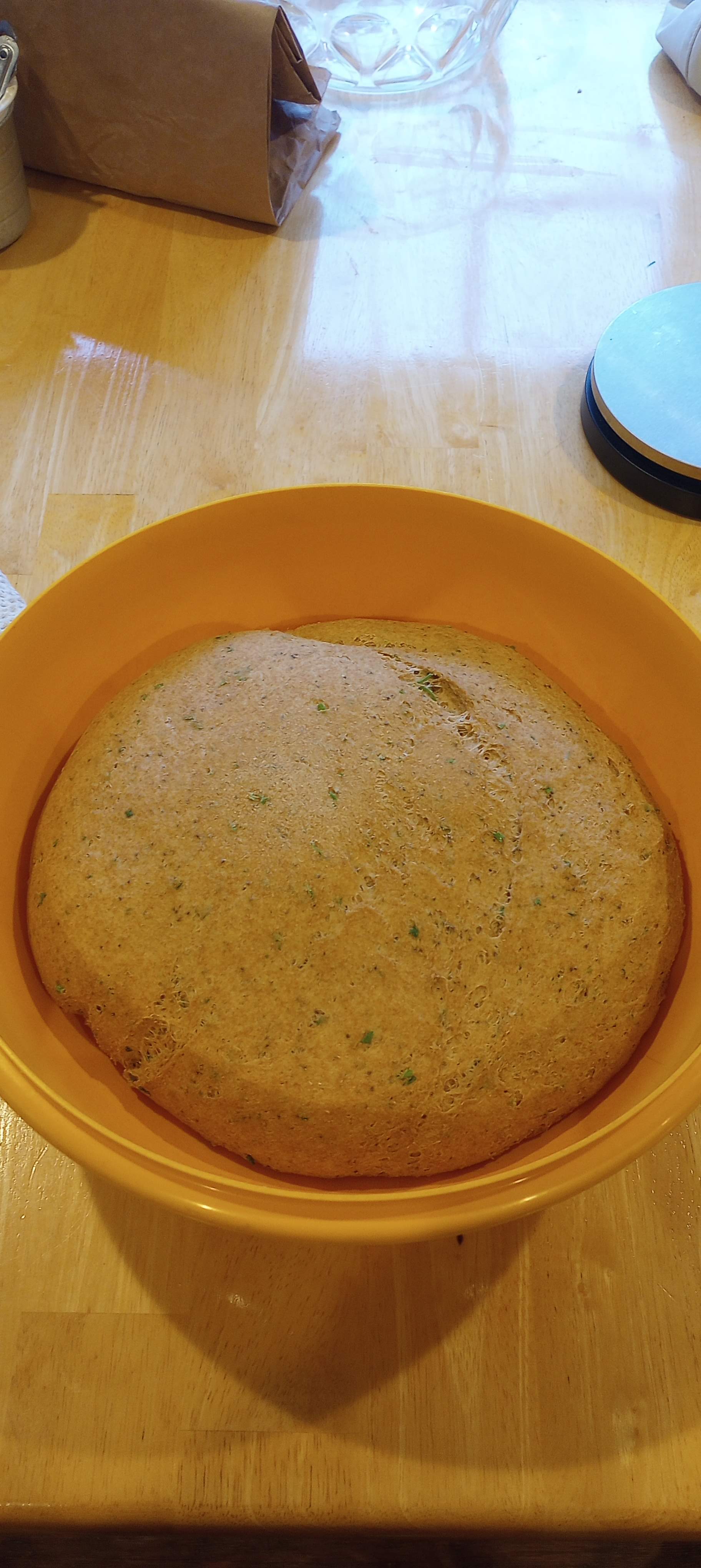

Next, we worked in the water, salt, seeds, parsley, and the rest of the flour. A top tip that seasoned bread bakers know: do not add all the flour that the recipe calls for at once. Each batch of bread comes from a different community of yeast in a different environment. You may need more or less than the recipe calls for; only experience will tell you the right amount. (Corollary: start making bread frequently if you wish to gain bread making skills.) We kneaded the dough into a smooth ball and let it rise until doubled. Then, we punched down the dough (squished out all the big bubbles), shaped it into a ball, and let the ball rise again on a baking sheet sprinkled with semolina to prevent sticking. Note: This recipe made two loaves; we divided the dough in half before the second rising.
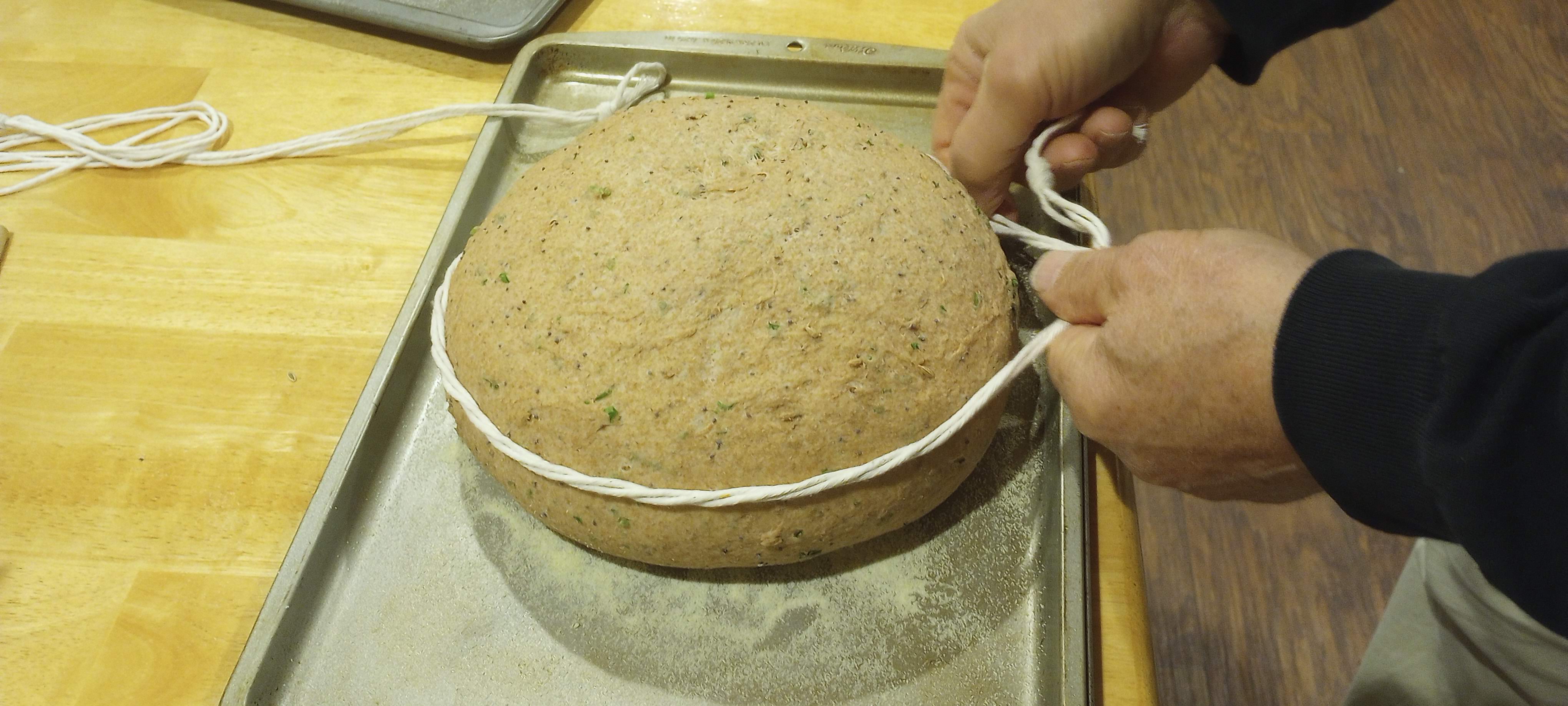
Next came an unexpected step- making a belt for the loaves of cotton butcher’s twine. Neither of us were quite sure why this was necessary. A bit of research revealed that this keeps the loaf from spreading laterally and encourages a high-rising loaf. In Pompeii, this would have prevented loaves from spreading and becoming stuck together in the oven.

This is where the “quadratus” part of the recipe comes in. “Quadratus” means “in quarters” in Latin (which you might have guessed), and a dowel is used to divide each belted loaf into quarters and then eighths. We actually used the handle of a wooden spoon. It worked just fine. Use what you have. I would bet the Pompeians did.
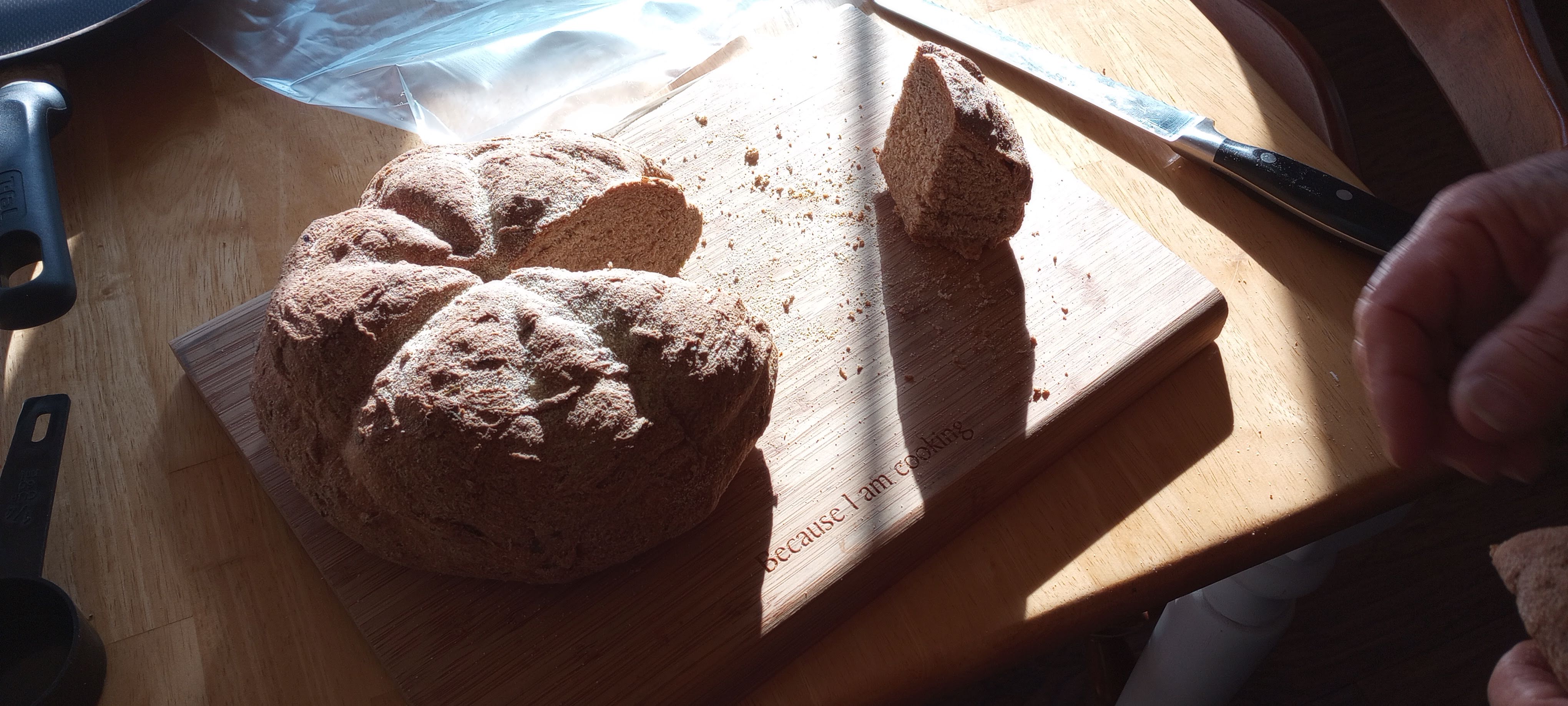
Oh my what a dense loaf. We all enjoyed it with Christmas dinner. I have to say that fennel seed is an under-appreciated flavor these days. Those Romans knew what was good. The ancient city of Pompeii may be lost, but I am so happy that this recipe survives!
I enjoy trying “vintage” recipes. It does not get more vintage that the Roman Empire. (Or does it? Stay tuned!) Dad has theorized that this bread would be even better if we cooked it over his grill, as that would be more like a Roman wood-fired oven. We will likely try that. What vintage/classic/ancient recipes have you tried? Share in the comments!
