Yes, I Can: Apple Butter
It is feeling like fall for sure in central Massachusetts. The nights are delightfully chilly. The wildlife is fattened up for hibernation We are getting ready to winterize the garden and chicken run. I recently decided to preserve some of that autumnal goodness in the form of apple butter. I previously posted about using wild crabapples to make apple butter to store in the freezer. However, this time I opted for some good old fashioned hot water bath canning.
I say this every time I post about home food preservation, and this time is no different. You must use a tested recipe from a knowledgeable source for food you intend to can. I used the apple butter recipe from The National Center for Home Food Preservation. Other sources for tested recipes I have use include:
- The home site of Ball Mason jars.
- My Food and Family, the recipe site for KraftHeinz. They own the Sure-Jell pectin brand. I also like the recipes on the little leaflet that comes in the pectin box.
- Better Homes and Gardens; actually recipes from any national magazine will have been tested for safety.
Be careful when using older cookbooks or back issues of cooking magazines. Safe canning methods have changed dramatically since the 1980’s. I know this from my own memory. If you find an appealing recipe from a vintage source try searching on-line to find a 21st century version.
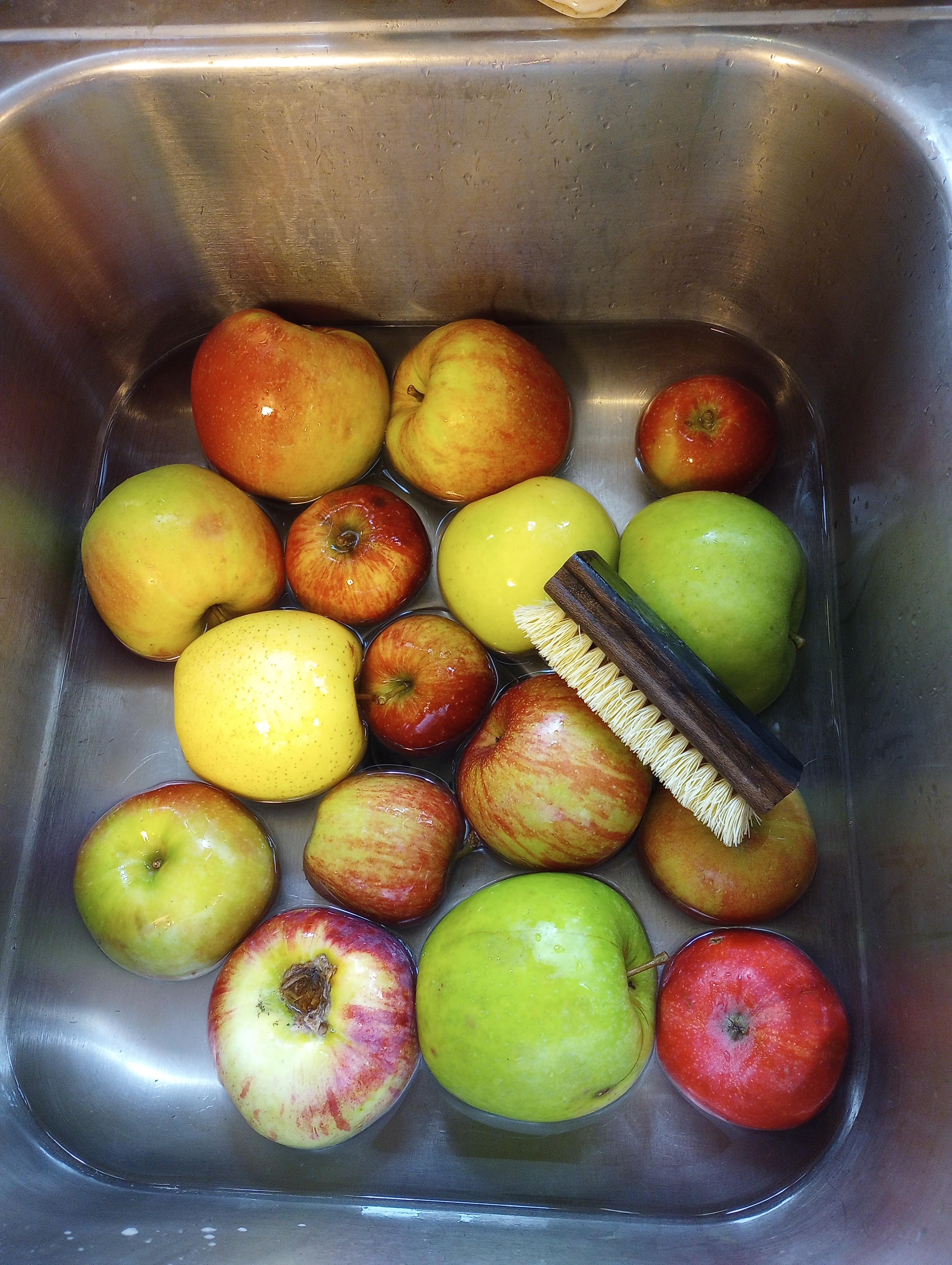
I visited my local farm stand for apples. They had so many varieties, and they were all grown locally. Best of all, as they were all the same price per pound the cashier told me it was okay to put all the varieties I chose into one bag. I selected MacIntosh, ginger gold, Macoun, Cortland, gala, golden beauty, and red delicious. A mix of apples make for the best apple butter, apple sauce, and apple cider. Or so I have been told.
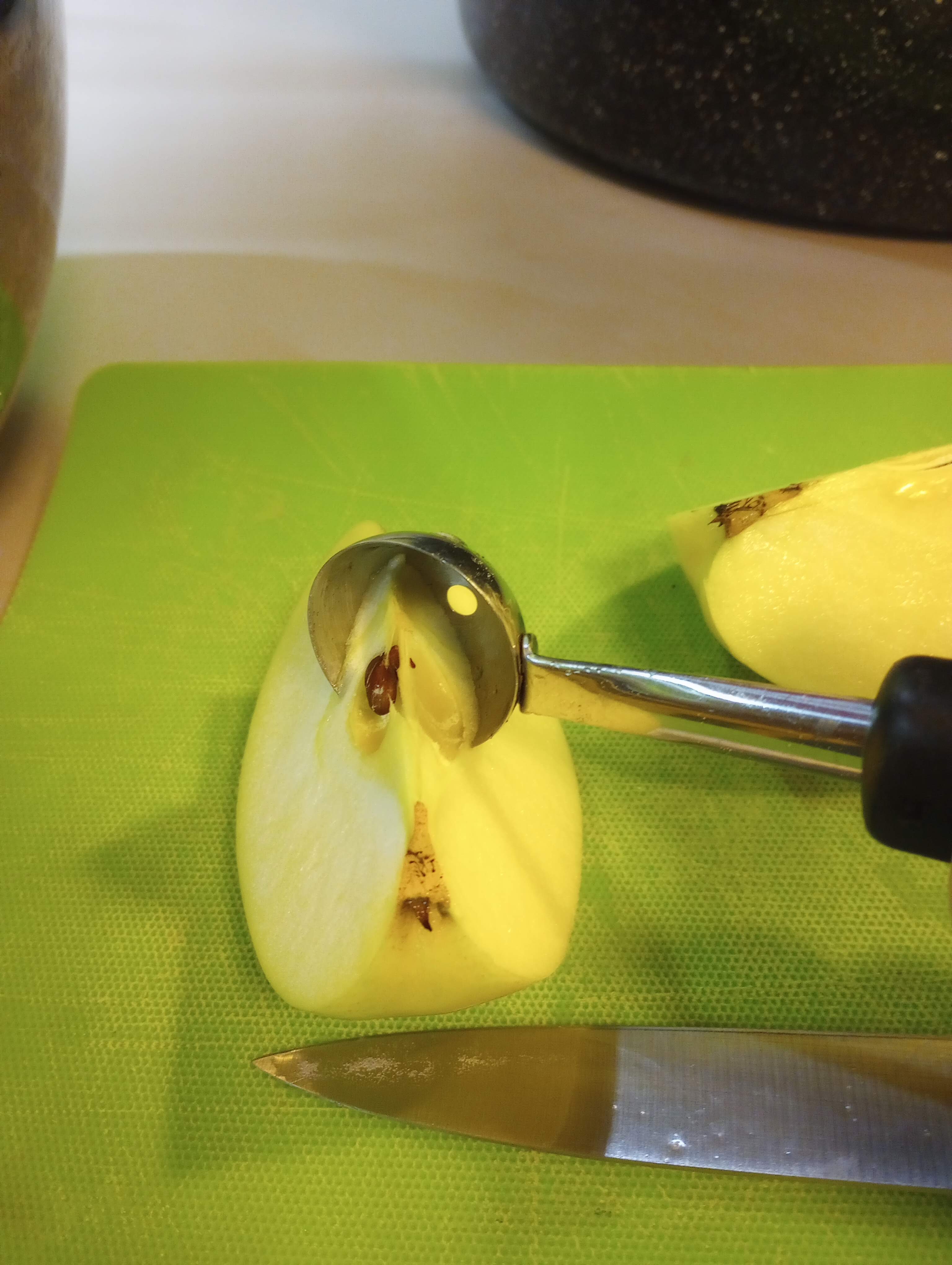
I gave all my apples a good scrub. I quartered them, then used a melon baller to scoop out the cores. I cut the bigger slices into chunks and loaded up my big kettle. I added the cider and vinegar last. One important note: make sure your vinegar is 5% acetic acid. The jug will be labeled. Some brands are also selling 4% vinegar, which will not safely preserve your food. I let them cook for about an hour. I stirred them occasionally.

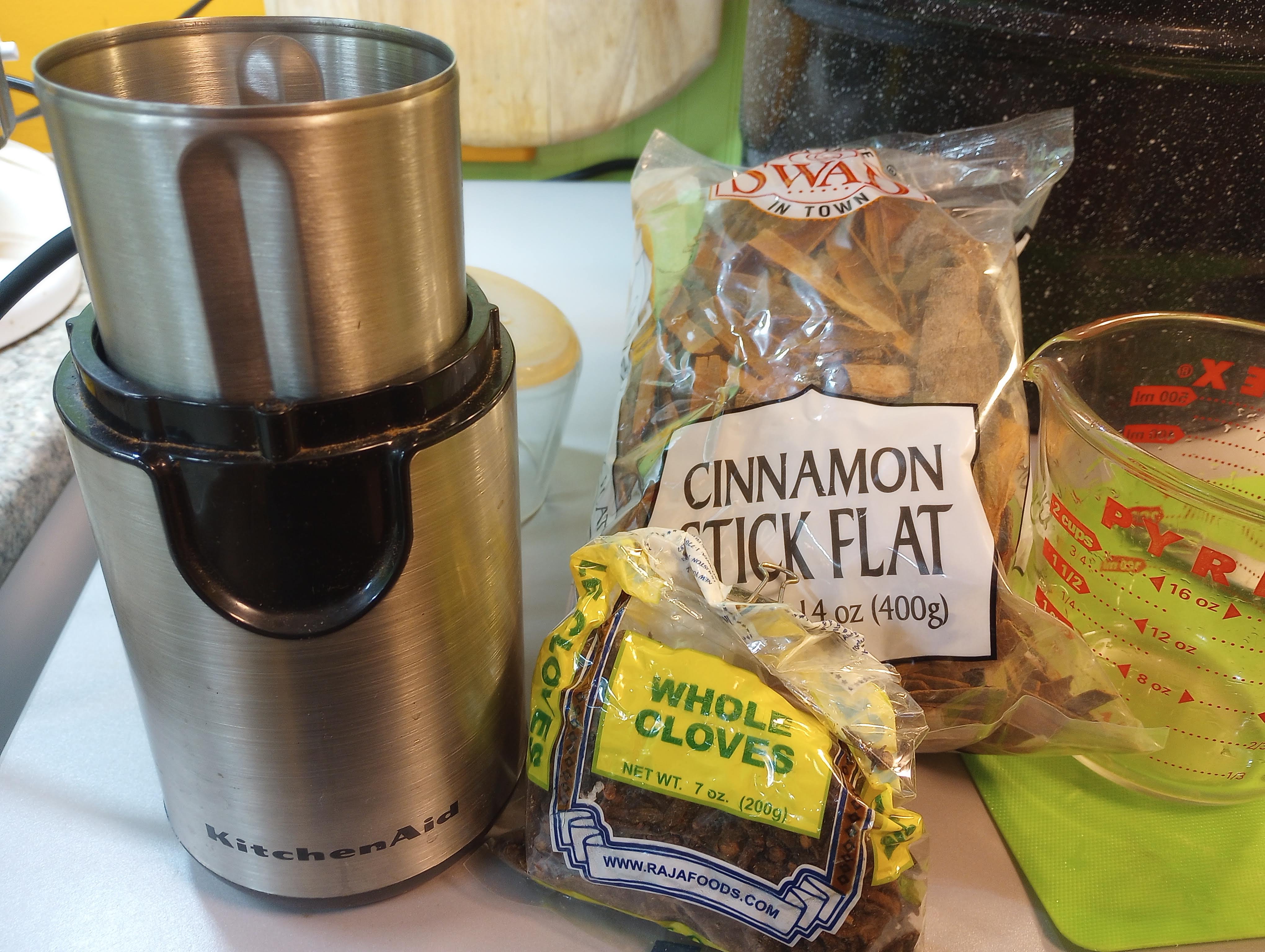
While the apples cooked, I ground the spices in my handy little kitchen grinder. If you have never smelled freshly ground cloves you do not know what you are missing. They have a distinct floral scent, which makes sense. Cloves are dried flower buds.
When the apples were soft and starting to fall apart, used my high-power blender to make a smooth puree. It took multiple batches, but I think the texture is better than using a food mill. Also, the blender incorporates the apple peels with all their thickening pectin.


I added the sugar and spices and let it cook gently until adequately thickened. While that happened, I prepared my jars, lids and rings. I processed my half pints as directed in the recipe.
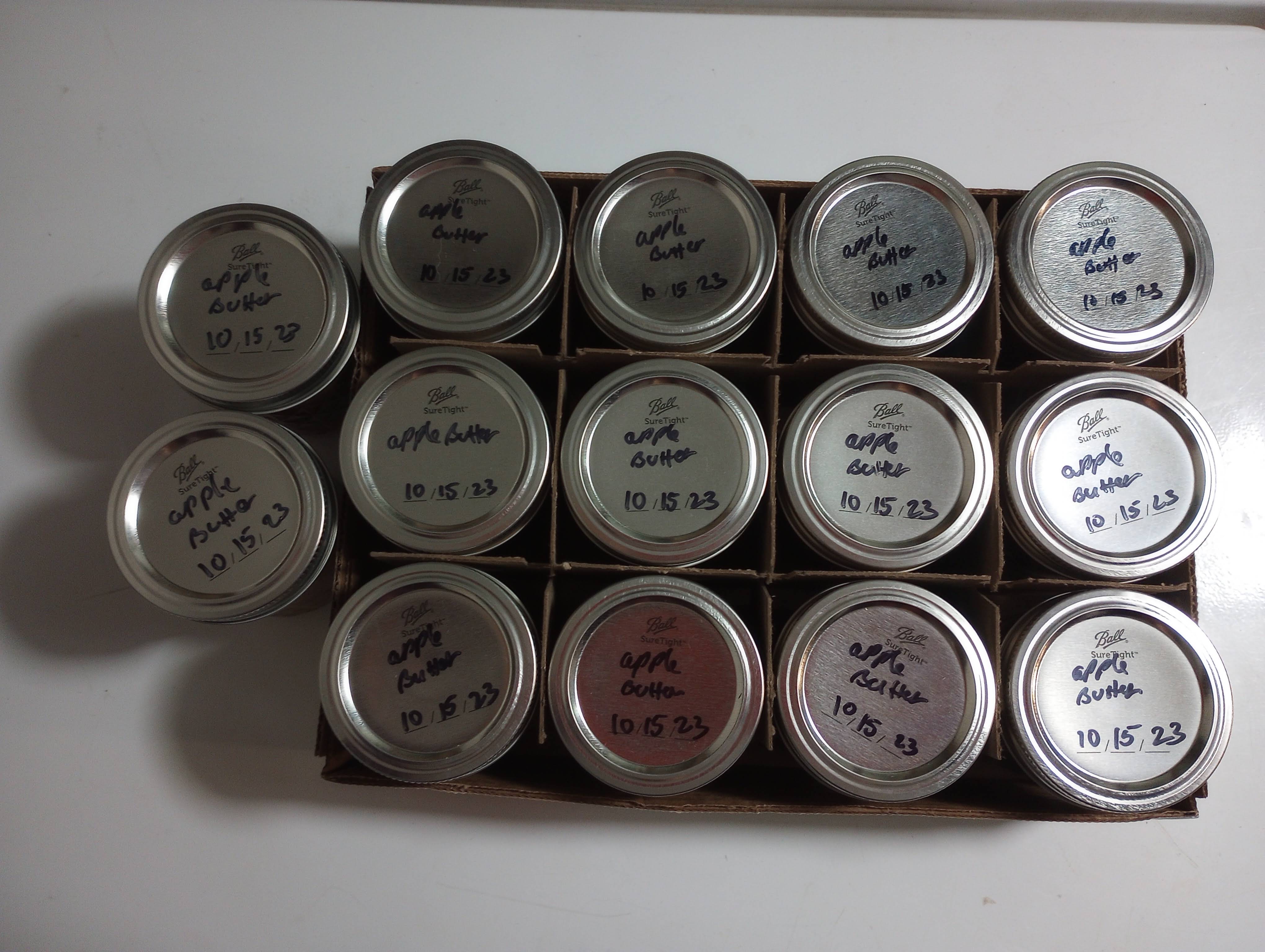
My final yield: 14 half-pints sealed for storage (some of these will be Christmas gifts) , plus one not-quite-full half pint for the refrigerator.
Home food preservation techniques; like canning, pickling, and drying; let you lock up the seasons to enjoy later. What have you preserved from the 2023 growing season? If you live where the season is just starting, what do you plan to put by? Share in the comments.
