An Eggcelent Summer
Wow, summer 2026 flew by.
This was the Year of the Egg here at Food It Yourself HQ. Our chickens went above and beyond with egg production. I could weave some tale about how we gave them special feed or played jazz music for them. The fact is we just let them live their chicken lives. Our current flock is populated with high-output breeds of chicken. Rhode Island Reds, Barred Rock, and Golden Comet hens are known for their heavy egg production.
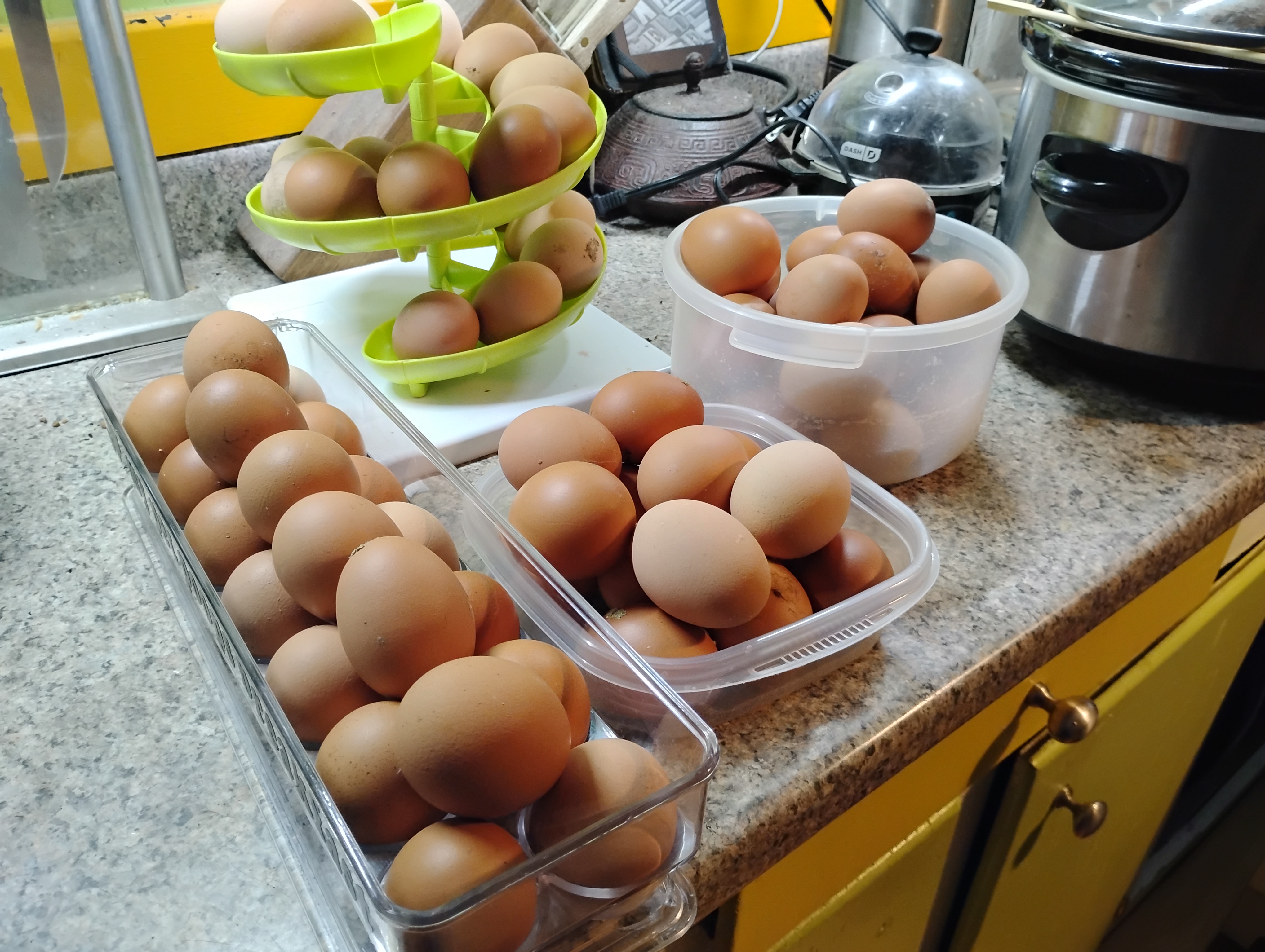
Such an abundance was a joyful problem to have. We shared eggs with friends, family, and coworkers and still had a surplus. Mr. Food It Yourself and I actually grew weary of eating eggs. Take a look at the state of our kitchen counter just a few weeks ago.
Hens typically lay less in the winter due to the shorter daylight hours. Even with our champion egg producers, we sometimes have to purchase eggs in the winter. I decided to investigate ways to preserve our extra eggs. I did not have to search long to find an old-fashioned process called “the water glass method” which allows eggs to be stored on a shelf. That is an appealing idea. Here is a delightful vintage image from Good Housekeeping magazine with the instructions spelled out.
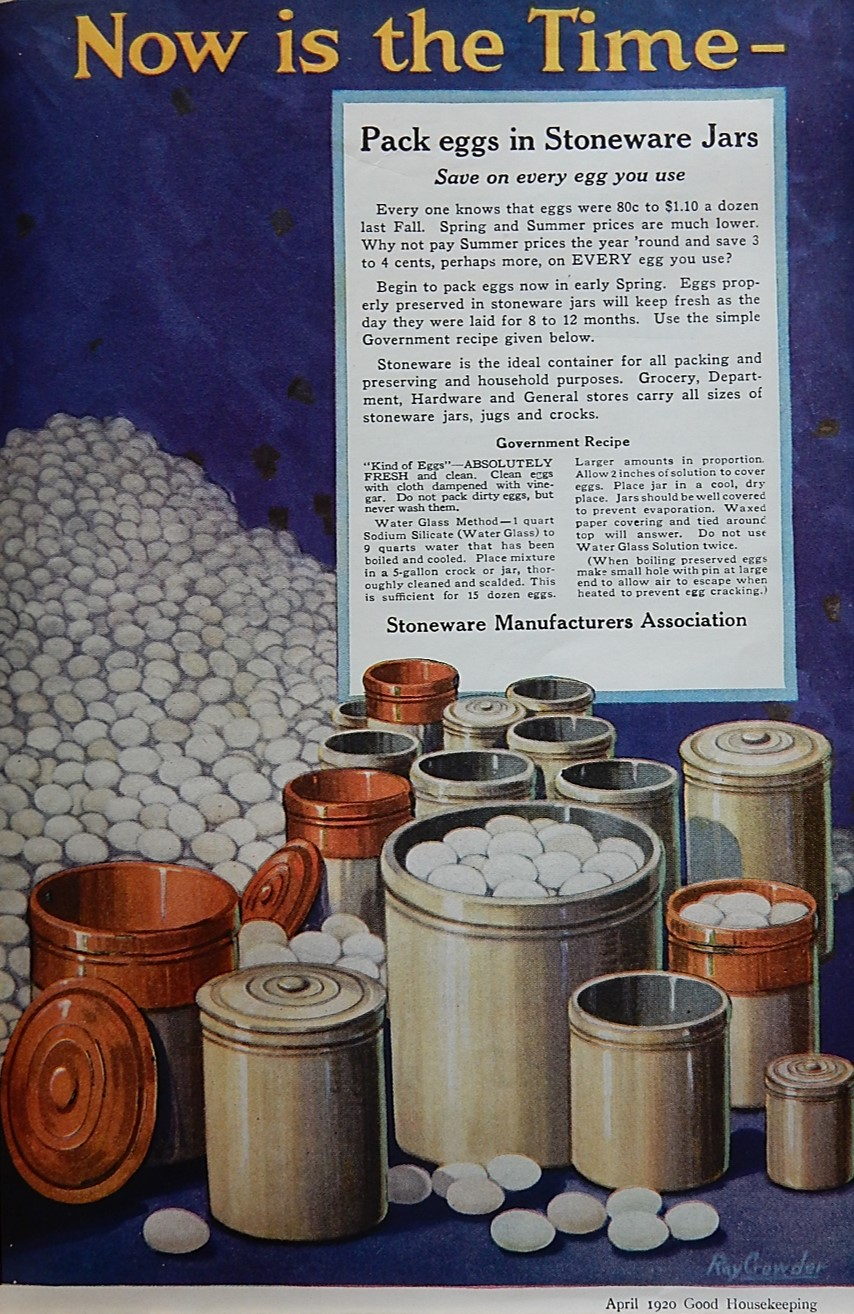
The sodium silicate seals up the pores in the eggshell, keeping the egg fresh for months. If you do a quick search on your preferred interweb search engine, you will find plenty of people still using this method for egg preservation.
I went out in search of sodium silicate. I tried all of my local hardware stores, as it is commonly sold as an additive to concrete. I could not find it, though. My Super Awesome Dad did some research and found that pickling lime (calcium hydroxide) can be used in the same way as sodium silicate. Furthermore, pickling lime is easy enough to find. It is usually right next to the canning supplies at hardware and grocery stores. I was so excited to try this method of food preservation.
Before I could buy my pickling lime, however, I found this important article from University of Pennsylvania’s Agricultural Extension. It turns out the water glass method is not as safe as originally thought. Eggs can be contaminated with salmonella bacteria before they are laid. Also, the pores in the eggshell are not actually sealed. The sodium silicate or calcium hydroxide solution can chemically contaminate the egg, or ambient bacteria can pass into the eggs during storage. For these reasons the water glass method is no longer recommended.
The article goes on to mention freezing beaten eggs for long-term storage. We do not have a very large freezer, but I prefer taking up freezer space to risking food-borne illness. The National Center for Home Food Preservation (which I should have turned to first) has excellent instructions for freezing eggs. I washed out some ice cube trays and got cracking.
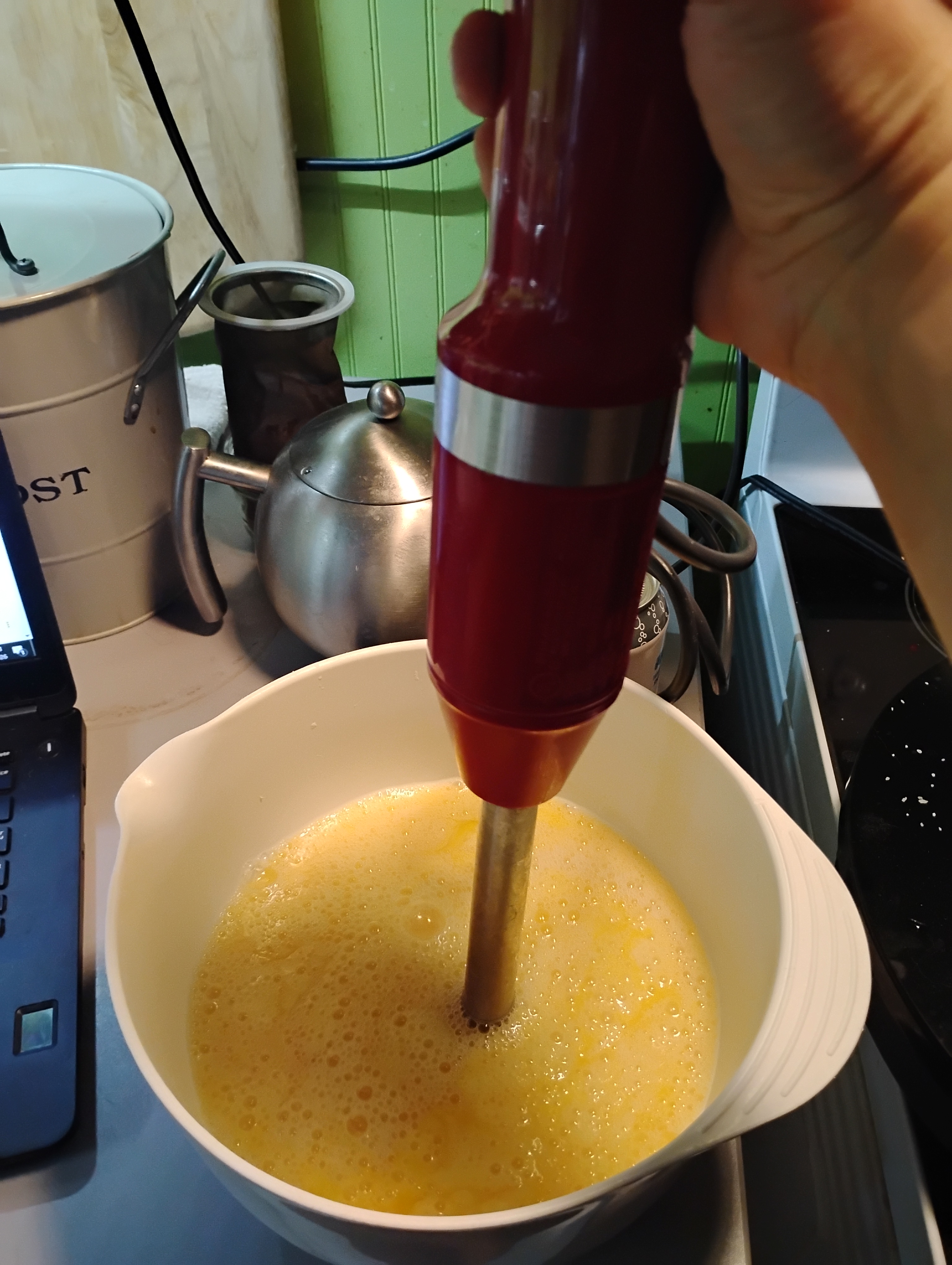
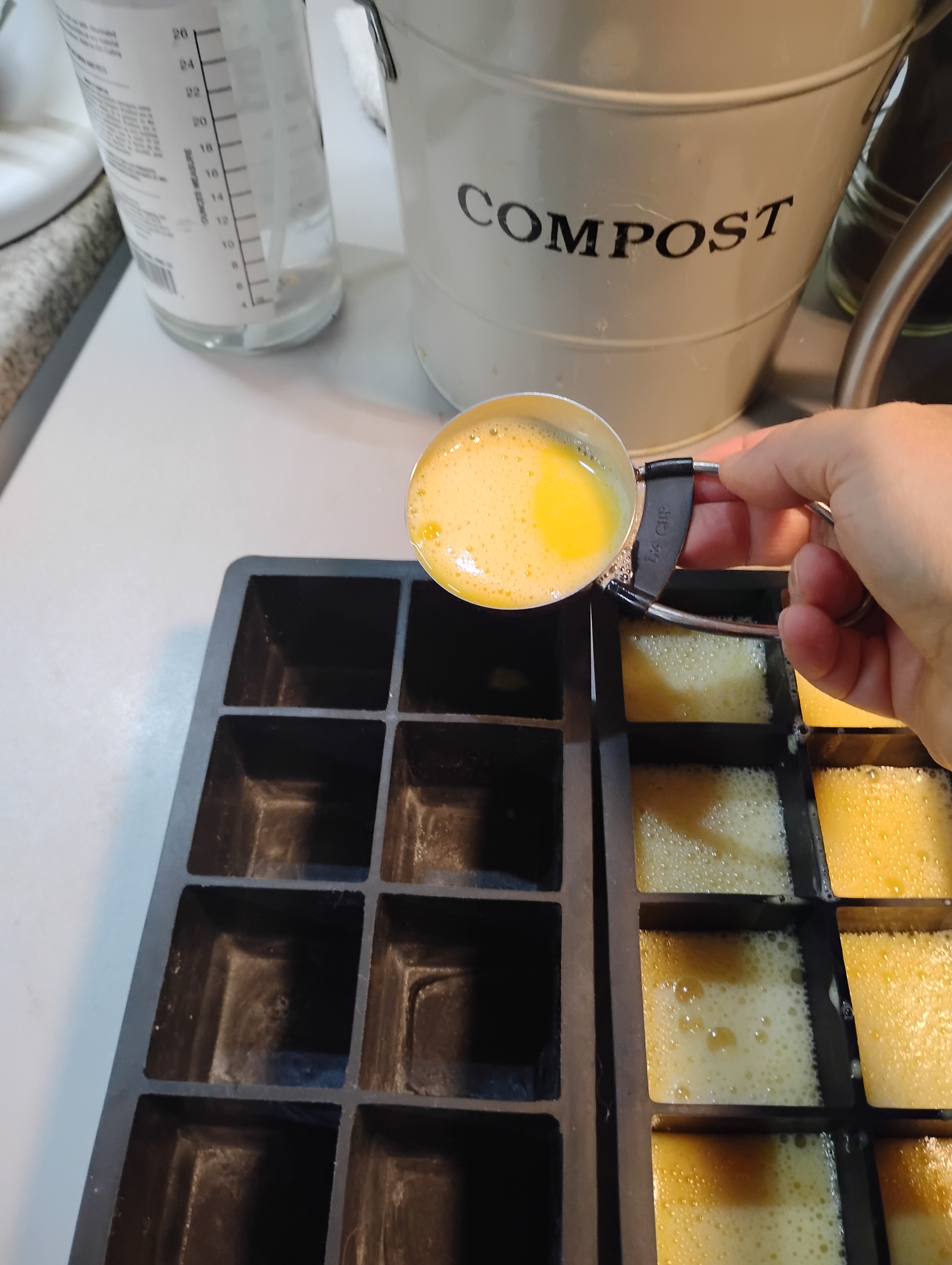
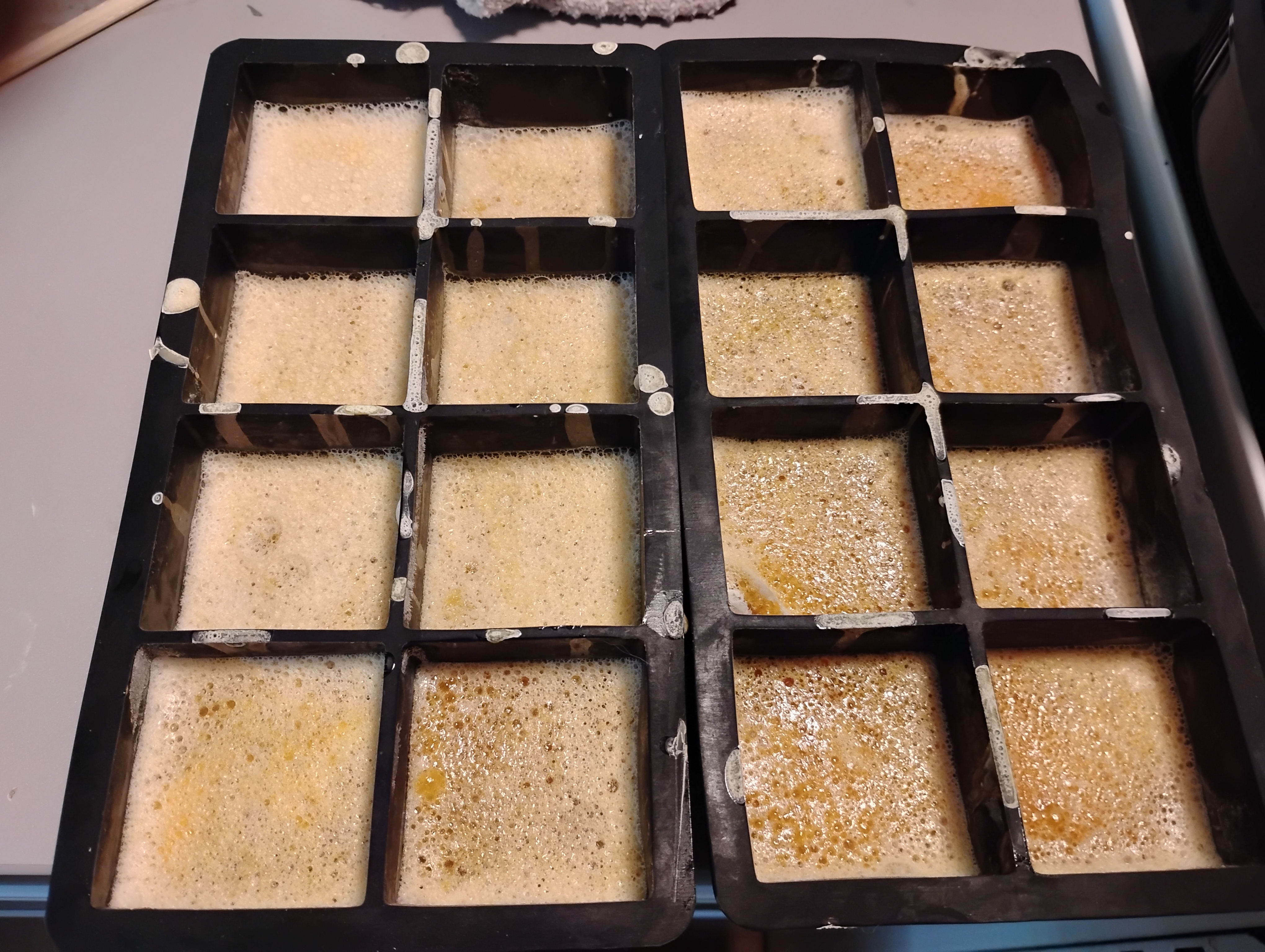
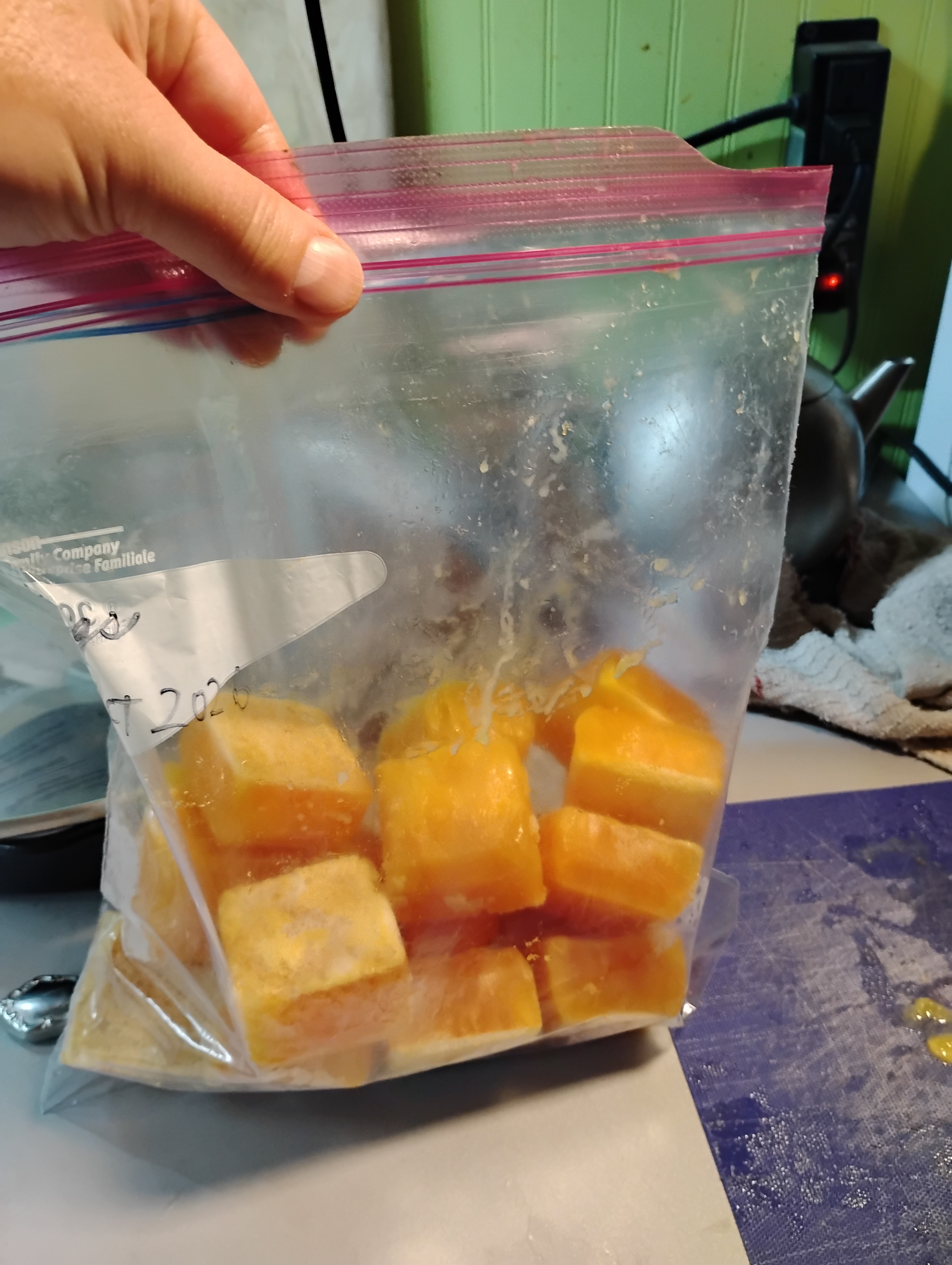
I cracked 16 eggs, one egg for each ice cube hole. I used a stick blender to beat the eggs. Our stand blender tends to whip in a lot of air, which the instructions said to avoid. I distributed the beaten egg into the trays and let them freeze for about 6 hours. I do not have any pictures of the unmolding process, as it required both hands. Even with the silicone trays it took some muscle power to get the frozen eggs out. I found dipping a butterknife in warm water and sliding the blade down the side of each cube helped. I repeated the process with 16 more eggs.
I am now prepared for those days when our hens are not providing. I will simply remove the necessary number of cubes from the freezer, thaw them in the refrigerator, and proceed with my recipe.
Before home refrigeration was common, “waterglassing” extra eggs may have been the safest way to preserve them. As noted, many people still use this method. I am choosing to use the freezing method. I will report back on how they perform in recipes. What are some methods (old or new) you have used to preserve food? Share in the comments!
